WordPress Pagpapanatili: Ano ang Dapat Isama sa Isang Plano ng Pangangalaga
Ano ba talaga ang dapat kasama sa isang plano sa pagpapanatili ng WordPress? Ang mahalagang checklist, mga pulang bandila na dapat iwasan, at kung paano suriin ang mga provider.
Ipinapakita sa orihinal na Ingles ang nilalamang wala pang available na salin.
Sa artikulong ito
maintenance plans range from $15/month to $500/month, and the difference isn't always obvious from the sales page. Some providers run automated plugin updates and call it maintenance. Others provide genuine technical partnership. Here's what a proper WordPress care plan should include, what to watch out for, and how to evaluate whether you're getting value.
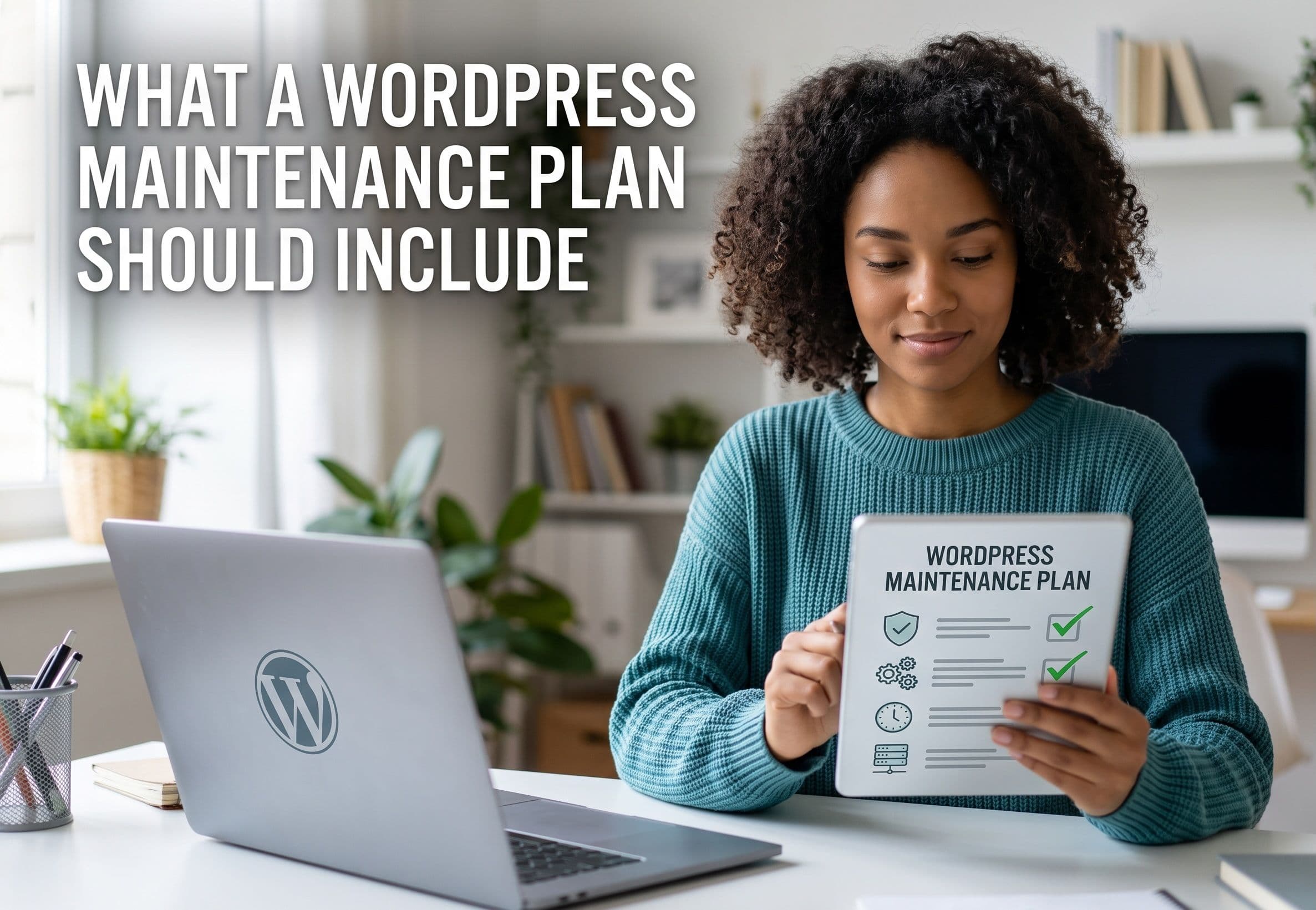
The Essential Checklist
1. Core, Theme, and Plugin Updates
What good looks like: Updates applied on a defined schedule (weekly minimum), tested in staging before production, with a rollback plan if something breaks. Compatibility verified before applying major version updates.
Simulan ang Iyong Proyekto
Buuin Natin ang Isang natatanging bagay.
Ibahagi ang URL ng iyong website, mga layunin, platform, at anumang deadline o limitasyon sa badyet. Karaniwan kaming sumasagot sa loob ng isang araw ng negosyo na may mga tanong o iminungkahing susunod na hakbang. Mangyaring huwag magpadala ng mga password o rekord ng customer.
What to watch for: "Automatic updates enabled" is not a maintenance service — that's a WordPress setting you can toggle yourself. The value is in testing and handling conflicts, not in clicking update.
Outdated plugins are the leading cause of hacked WordPress sites, which makes this the single most important item on the list.
2. Daily Off-Site Backups
What good looks like: Automated daily backups of both files and database, stored off-site (separate from your hosting), with at least 30 days of retention and tested restore capability.
What to watch for: Backups stored on the same server as your site are useless if the server fails or is compromised. Also verify that restores are actually tested — an untested backup is a hope, not a plan.
3. Security Monitoring
What good looks like: Real-time malware scanning, file integrity monitoring (alerts when core files change unexpectedly), failed login monitoring, and blacklist status checks.
What to watch for: A security plugin installed on your site isn't the same as monitoring. Monitoring means someone (or something) is watching the alerts and responding.
4. Uptime Monitoring
What good looks like: Checks every 1–5 minutes from multiple geographic locations, with immediate alerts to your provider (not just to you) when the site goes down.
What to watch for: Uptime monitoring that only notifies you is half a service. You want your provider notified so they can investigate before you even notice.
5. Performance Monitoring
What good looks like: Monthly Core Web Vitals checks, database optimization, cache management, and alerts when performance degrades.
What to watch for: Performance degrades naturally as you add content and plugins. A plan without performance monitoring means you'll discover the problem when your rankings drop.
6. Support and Development Time
What good looks like: A defined response time SLA for issues, plus included monthly time for small fixes and content updates. Clear escalation for emergencies.
What to watch for: "Unlimited support" usually isn't. Read the fine print on what counts as support versus billable development.
7. Monthly Reporting
What good looks like: A plain-English report covering: updates applied, threats blocked, uptime percentage, performance metrics, and backup status.
What to watch for: Automated reports with no human commentary. The value is in someone reviewing the data and flagging anything that needs your attention.
Red Flags in Maintenance Plans
No staging environment. If updates are applied directly to your live site, you're one bad plugin update away from downtime.
No security incident coverage. Ask explicitly: if my site gets hacked while under your maintenance plan, what happens? Some providers charge full recovery rates. Others include cleanup.
Long-term contracts. Quality providers offer month-to-month because they're confident you'll stay. Annual lock-ins with early termination fees are a red flag.
No access to your own site. Some providers restrict your admin access to prevent you "breaking things." You should always have full ownership and access to your own site.
Vague scope. "We'll take care of everything" isn't a scope. You want a documented list of what's included and what's billable.
How to Evaluate a Provider
Ask these questions before signing:
Do you test updates in staging before applying to production?
Where are backups stored, and how often do you test restores?
What's your response time for a site-down emergency?
If my site gets hacked, is cleanup included?
How much development time is included monthly, and what counts as billable?
Can I see a sample monthly report?
Is this month-to-month, or is there a contract term?
What Maintenance Actually Prevents
The value of maintenance is measured in problems that don't happen:
Security breaches. Sites with current updates and active monitoring are dramatically less likely to be compromised. When they are, the infection is caught in hours rather than weeks — we've cleaned sites where the owner had no idea for weeks that thousands of spam posts had been injected.
Broken updates. A plugin update that conflicts with your theme can take down your checkout, your contact forms, or your entire site. Staging testing catches this before customers do.
Performance decay. Sites slow down over time. Monthly optimization keeps Core Web Vitals in the green, protecting your rankings.
Data loss. Server failures, bad deployments, and hacks all happen. A tested daily backup turns a catastrophe into a 20-minute restore.
Our Approach
Our WordPress maintenance plans cover every item on the checklist above: scheduled updates tested in staging, daily off-site backups, 24/7 security and uptime monitoring, monthly performance reviews, priority support, and plain-English monthly reports. All plans are month-to-month with no lock-in.
Every new plan starts with a health audit of your existing site — we document your stack, fix any urgent issues, and then take over ongoing maintenance regardless of who built it.
Get in touch and we'll recommend the right plan for your site.
Frequently Asked Questions
Kailangan ko ba talaga ng plano ng pagpapanatili?
If your website generates revenue or represents your business publicly, yes. WordPress requires ongoing updates for security and compatibility. The question isn't whether maintenance happens — it's whether you do it yourself consistently or delegate it.
Can I just enable automatic updates instead?
Automatic updates handle the clicking, but not the testing, conflict resolution, or rollback if something breaks. They also don't cover backups, security monitoring, or performance. Auto-updates are one small piece of maintenance.
What happens if an update breaks my site?
With a proper maintenance plan: the provider catches it in staging before it reaches production, or rolls back immediately if it slips through. Without one: your site is broken until you notice and fix it.
How much should WordPress maintenance cost?
Plans typically range from $50–200/month for standard business sites, with higher tiers for e-commerce and high-traffic sites. Be skeptical of plans under $30/month — that price point rarely covers genuine human oversight.
Isinulat ni
Muhammad Junaid Tariq
Muhammad Junaid Tariq is a full-stack web developer and the founder of Premier Solutions. With 5+ years of experience and 200+ delivered projects, he specializes in custom WordPress development, WordPress security and malware removal, Next.js applications, and technical SEO for clients across the US, UK, and Europe.