
Claude Sonnet 5.5 lists at half the price of Claude Opus 5.5, and still two independent trackers rank them differently on what a task costs. The reason is simple: you pay for the tokens a model uses, and models use very different amounts. This guide shows how to measure cost per task on your own work.
Two trackers, two answers
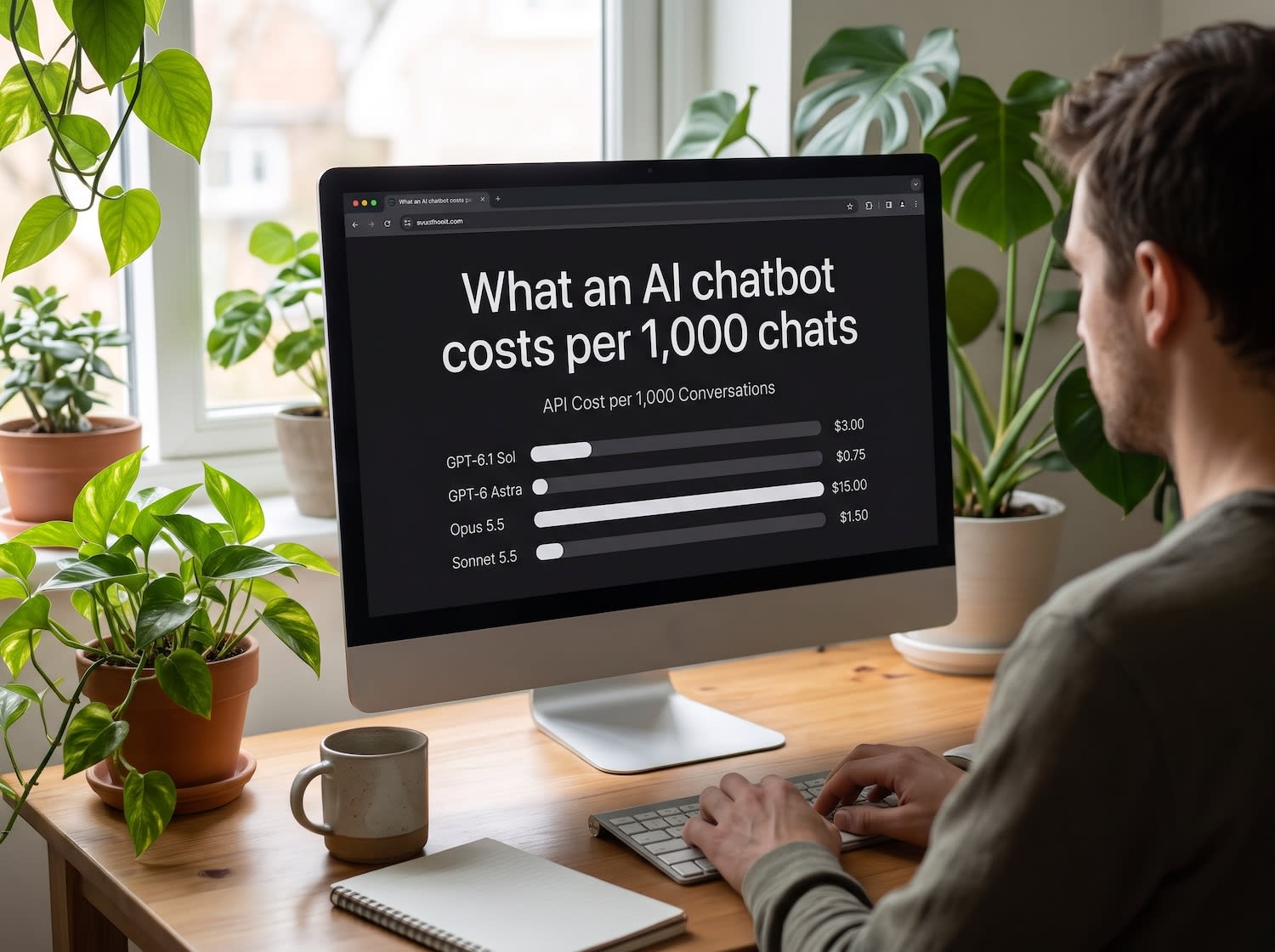
Per million tokens, Sonnet 5.5 costs $2 input and $10 output, and Opus 5.5 costs $4 and $20.
On the Vals Index, Sonnet 5.5 cost $21.34 per test and Opus 5.5 cost $32.14, so Sonnet was cheaper per test.
Artificial Analysis, as reported by AI Weekly and others, measured the opposite at max effort. Sonnet 5.5 used about 193,000 output tokens per task and cost $7.60, while Opus 5.5 used about 119,000 and cost $5.98.
The two trackers use different tasks and different effort settings, so they do not contradict each other. They show that cost per task depends on what you ask and how hard the model is told to think.
The arithmetic
A model that costs half as much per token but writes 60% more tokens still costs about 20% less on output alone: 0.5 × 1.6 = 0.8. Add input, cached tokens and extra tool-call turns, and the gap can close or reverse. That is what Artificial Analysis reported at max effort.
The formula is:
- Cost per call = input tokens × input price + cached tokens × cached price + output tokens × output price
- Cost per task = the sum of every call it takes, including retries
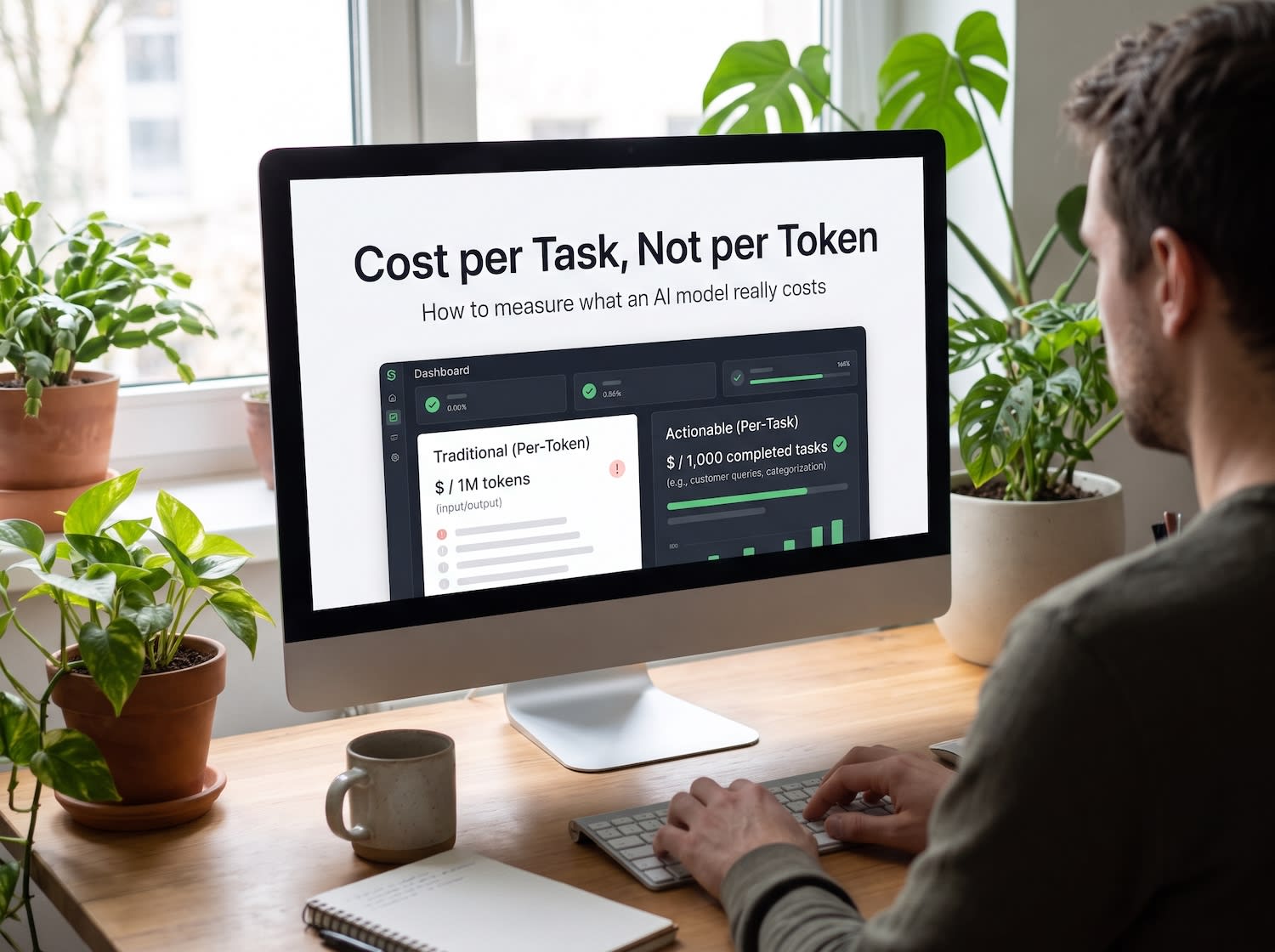
- Cost per completed task = total spend ÷ tasks that actually passed
Only the last figure tells you what finished work costs.
Effort changes the answer
Opus 5.5's default effort is medium, and adaptive thinking cannot be turned off. One write-up reports Sonnet 5.5 using about 14,000 output tokens per task at low effort, 19,000 at medium, 34,000 at high and 74,000 at xhigh. Treat those numbers as that tester's, not yours, but the shape matters: the same model can cost five times more per task at a higher setting.
ان خیالات کو عملی شکل دیں۔
ایک مخصوص اصلاح سے لے کر مکمل ویب سائٹ تک، ہم کام کا دائرہ طے کرنے اور اسے مکمل کرنے میں مدد کرتے ہیں۔
میری ویب سائٹ پر بات کریںاے آئی آٹومیشناپنے اہداف کا اشتراک کریں۔ ہم عام طور پر سوالات اور عملی اقدامات کے ساتھ 4 گھنٹوں کے اندر جواب دیتے ہیں۔
Measure your own in an afternoon
- Pick 20 real tasks from your work, with client data removed.
- Run each task on each model at the effort setting you plan to use.
- From the usage block each API returns, record input, cached and output tokens for every call.
- Mark each task pass or fail, using a rule you wrote before you started.
- Record how many minutes you spent reviewing and fixing each result.
- Calculate cost per completed task, and add your review time at your own hourly rate.
Use a table like this to record it:
| Model and effort | Tasks passed | Tokens (in / cached / out) | API cost | Review minutes | Cost per completed task |
|---|---|---|---|---|---|
| Your model and setting | Your count | Your totals | Your cost | Your minutes | Total divided by passed |
Our blind-test kit gives you five WordPress tasks and a rubric to start from.
What to do with the answer
- Use the cheaper model at a low or medium effort for routine work.
- Move a task to the larger model only if the cheaper one fails it at an acceptable effort.
- Measure again after each model release. Prices, token habits and effort behavior change.
Frequently asked questions
Is Sonnet 5.5 cheaper than Opus 5.5?
Per token, yes: it lists at half the price. Per task, it depends on the effort setting and the work. Vals and Artificial Analysis point in different directions.
What is cost per completed task?
Total spend divided by the number of tasks that passed your quality check. It counts the cost of failures and retries.
Does caching change which model is cheaper?
It can. Cached reads cost $0.20 per million tokens on Opus 5.5, so a task that rereads a large context is cheaper than its list price suggests. Measure it with your real prompts.
Choosing a model for a real project?
We test models on your tasks, log cost per completed task and set spend limits before launch. See our AI integration services.