

WordPress XML-RPC is an older remote communication interface that still supports legitimate tools, but it is also a frequent target for password guessing, pingback abuse, and noisy automated traffic. The right action is not always “disable it.” First determine whether the site uses it, then disable, restrict, or protect it according to a verified business need.
What XML-RPC does
The xmlrpc.php endpoint lets external clients perform WordPress actions through structured requests. Mobile publishing, some management tools, Jetpack features, and legacy integrations may rely on it. A public brochure site with no remote publishing often has no reason to expose the endpoint, while a managed publishing workflow may require controlled access.
Why attackers target XML-RPC
Automated tools probe the endpoint because one request can contain multiple authentication attempts. Pingback functions have also been misused to generate unwanted requests toward other sites. The result may be account-takeover attempts, wasted server resources, distorted logs, or participation in reflected traffic.
Use the account controls in our WordPress two-factor authentication guide because disabling one endpoint does not protect every login path.
Step 1: Confirm whether anything depends on it
Inventory mobile apps, Jetpack modules, remote editors, monitoring tools, and hosting features. Review recent access logs for legitimate XML-RPC clients and ask site owners about publishing workflows. Do not treat traffic alone as proof of need; most requests may be automated abuse.
A structured WordPress security audit can map exposed endpoints, privileged accounts, active integrations, and suspicious traffic before changes are made.
Step 2: Disable it when unused
The strongest option for an unused service is to make it unavailable. Disable XML-RPC at a reliable layer supported by the hosting configuration, then verify that the response no longer permits operations. Avoid stacking several plugins and server rules that make future troubleshooting confusing.
Retest publishing, backups, monitoring, and any remote-management workflows. Record why the endpoint was disabled and where the control lives so a later migration does not accidentally remove it.
Step 3: Restrict it when required
If a trusted service needs XML-RPC, allow only the required methods or sources where technically practical. Block pingbacks if they are unnecessary, rate-limit repeated authentication calls, protect upstream accounts, and reject malformed or oversized requests. Restrictions should be enforced before expensive WordPress processing whenever possible.
Our WordPress security service can implement layered endpoint controls without disrupting legitimate publishing workflows.
Đưa những ý tưởng vào thực tế.
Từ một cải tiến cụ thể đến một website hoàn chỉnh, chúng tôi giúp bạn xác định phạm vi và triển khai.
Trao đổi về website của tôiThiết kế websiteChia sẻ mục tiêu của bạn. Chúng tôi thường phản hồi trong vòng 4 giờ kèm theo các câu hỏi và bước tiếp theo thiết thực.
Step 4: Monitor behavior
Track request volume, source diversity, failed authentication, response codes, latency, and unusual spikes. A sudden increase may indicate a password campaign or distributed scan. Keep independent logs so an attacker who reaches WordPress cannot erase the only evidence.
Regular WordPress maintenance helps ensure endpoint controls survive plugin updates, migrations, and hosting changes.
Do not rely on one control
XML-RPC protection does not replace unique passwords, multi-factor authentication, least privilege, patching, backups, file integrity checks, and incident response. Attackers change paths when one route closes. The objective is to reduce exposed functionality and detect attempts across the full site.
Review these common WordPress security mistakes to catch configuration gaps that endpoint blocking alone cannot solve.
Testing checklist
Check the endpoint response, confirm required integrations, review logs after deployment, test administrator login, verify mobile or remote publishing, and document rollback steps. Recheck after a CDN, host, firewall, or plugin change because control order can change.
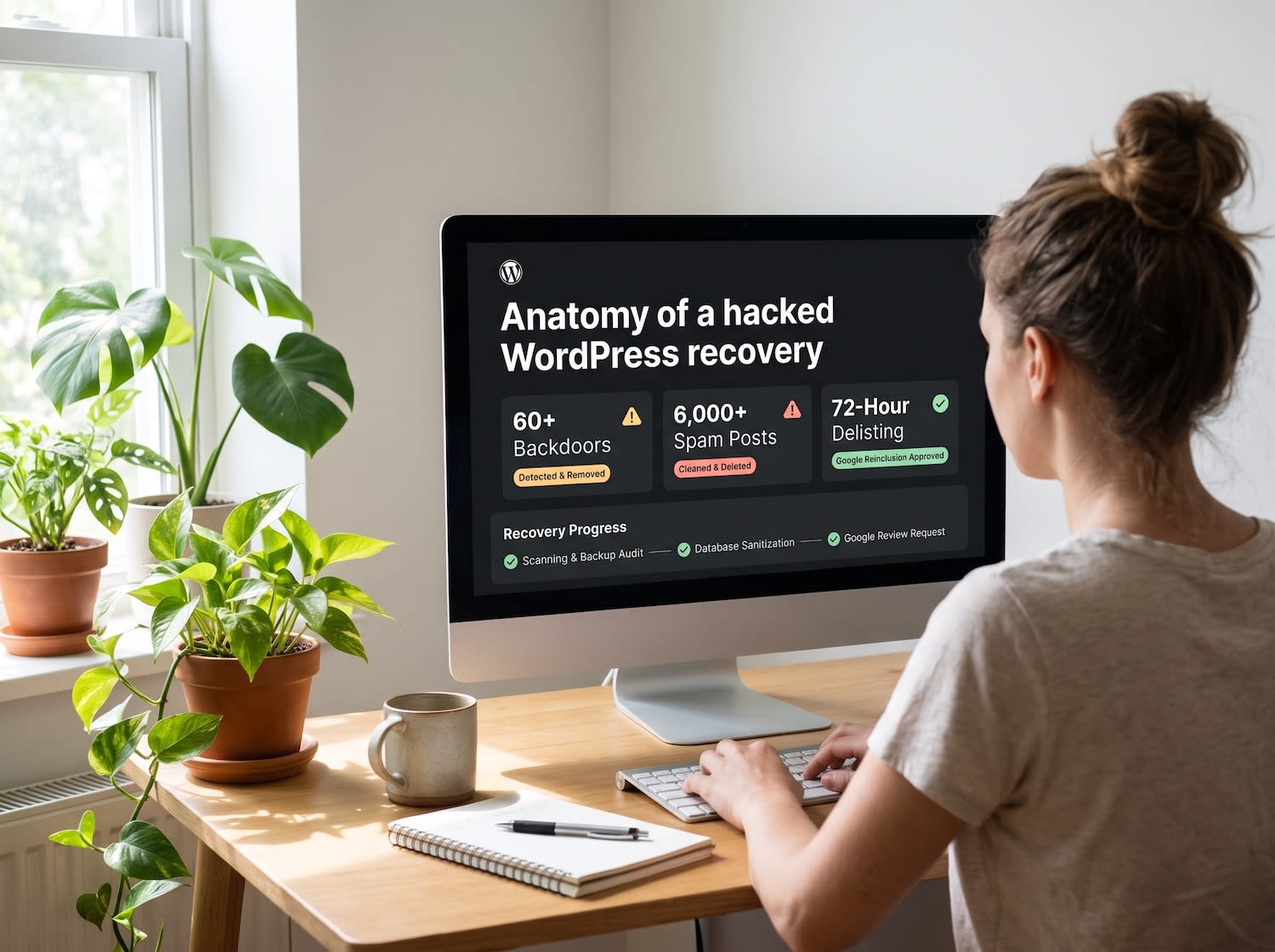
If log evidence suggests successful access, use our hacked WordPress recovery service to preserve evidence, identify persistence, clean the site, and close the entry point.
Frequently asked questions
Should I disable XML-RPC in WordPress?
Disable it when no active tool needs it. If Jetpack, the WordPress mobile app, remote publishing, or another verified integration depends on XML-RPC, restrict and monitor it instead of disabling it blindly.
Does XML-RPC cause WordPress brute-force attacks?
XML-RPC can be abused to amplify password guessing and pingback traffic. Strong authentication, rate limits, filtering, and monitoring reduce the risk.
Will blocking xmlrpc.php break my website?
Normal visitors usually do not need it, but some remote-management and publishing services do. Test every integration before and after a change.
Is hiding xmlrpc.php enough?
No. Security should rely on disabling unused functionality or enforcing controls at the server, edge, and application layers—not on an obscure URL.