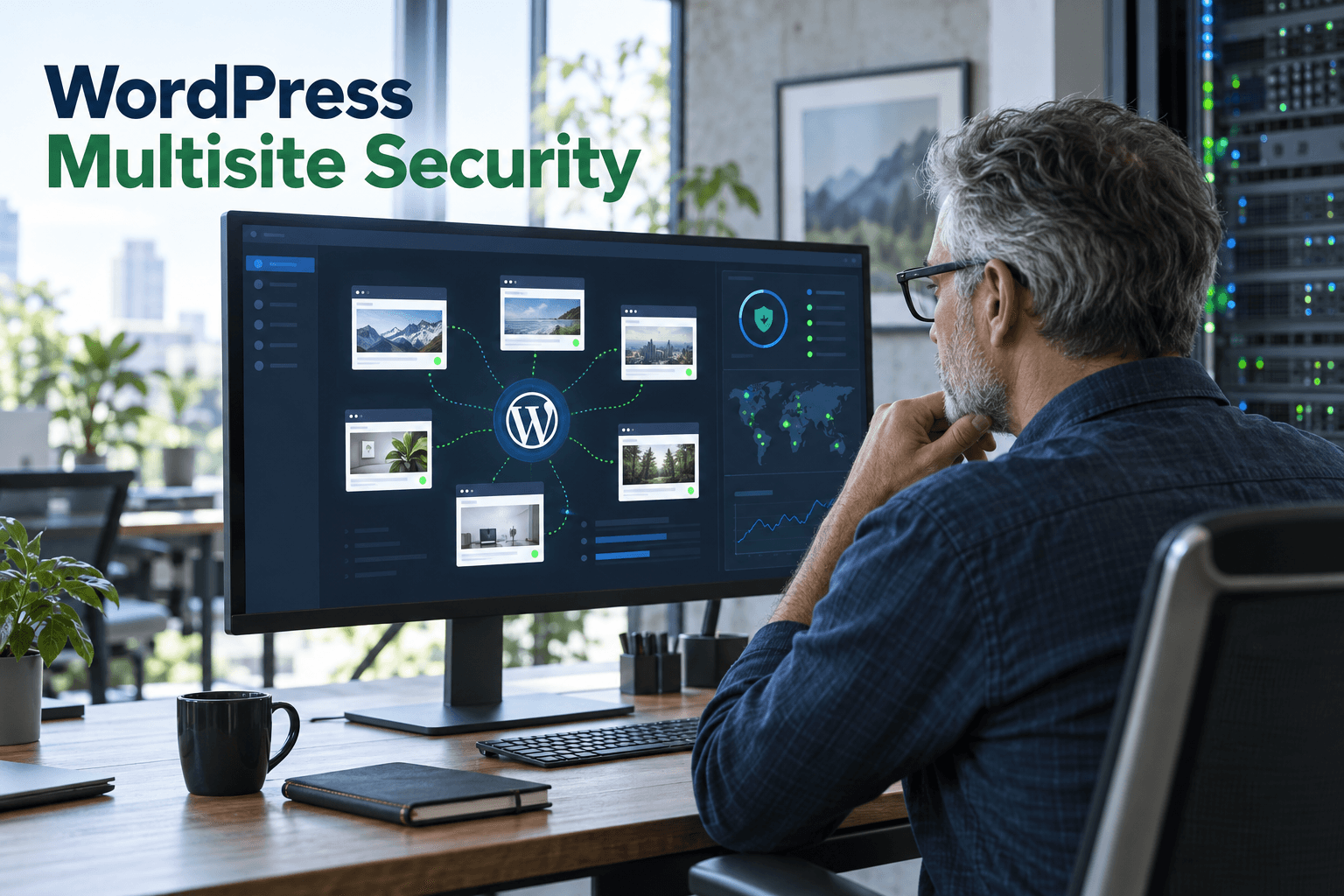
WordPress Multisite centralizes many websites under one WordPress installation. That can simplify updates and governance, but it also concentrates risk. A vulnerable network-enabled plugin, stolen super-admin session or server compromise can affect many sites at once.
The security model should reflect that shared architecture. Site administrators have reduced capabilities, while super administrators control plugins, themes and network settings. Protecting that small group and the shared codebase is the foundation of Multisite security.
1. Confirm Multisite is the right boundary
Multisite is useful when sites share ownership, infrastructure and governance. It is not strong tenant isolation for unrelated organizations with conflicting compliance, data residency or administrator requirements. Sites share core files, plugins, themes and commonly the same database service.
If one customer requires independent server access, release timing or incident containment, a separate installation may be safer and easier to explain. Architecture should follow risk and operating responsibility, not only convenience.
2. Harden super-administrator access
Use the smallest possible number of super admins, individual accounts, password-manager-generated credentials and MFA. Review the list monthly and after staff or vendor changes. Do not use a super-admin account for routine editing on individual sites.
Apply the account review process in how to find and remove rogue WordPress administrators across both network and site-level roles.
- Reserve super-admin privileges for network operations.
- Use a separate lower-privilege account for normal content work.
- Revoke sessions and application passwords during offboarding.
- Alert on super-admin creation, deletion and privilege changes.
3. Govern plugins and themes centrally
Only trusted maintainers should install code. Keep a documented approved set, remove abandoned extensions and test network-wide updates on a representative staging network. A plugin activated for the entire network expands the blast radius of a flaw or compatibility problem.
Evaluate ownership, update practices and dependencies with our WordPress plugin supply-chain security guide before adding network-level code.
4. Control uploads and storage
Define allowed file types and storage quotas for the network. Treat user-uploaded SVG, archives and office documents according to their actual risk. Ensure uploads cannot execute as code, and keep sensitive tenant documents behind authorization rather than relying on a public media URL.
Use the directory ownership and server rules in the WordPress file permissions guide to protect shared core, plugin, theme and upload locations.
5. Protect domains, cookies and HTTPS
Mapped domains need valid HTTPS, controlled DNS and consistent redirect behavior. Review cookie scope carefully so authentication behaves as intended across domains and paths. Test logins, password resets and administration from every domain pattern after proxy or CDN changes.
6. Design backups for network-wide and site-level recovery
A full-network backup protects shared files and databases, but operational recovery may require restoring one site without rolling back every tenant. Confirm what the backup product can restore, how domain mappings are handled and whether large networks exceed execution or storage limits.
Run documented restore drills using our and test both complete-network and individual-site scenarios where the tooling supports them.
7. Monitor with network context
Collect privileged logins, user changes, plugin and theme actions, file changes, failed updates, storage growth and suspicious requests. Alerts should identify the affected site and whether the event is site-level or network-level. A network activation deserves a different priority from a content edit.
Build this into the alert design from our so responders can quickly estimate the number of sites at risk.
8. Prepare for incidents with a wider blast radius
Keep offline contact details for site owners, hosting support and DNS administrators. Your plan should explain when to isolate the full network, when one site can be suspended and how to communicate cross-site impact. Preserve shared logs before cleanup and rotate network-level credentials after a serious compromise.
A professional can help assess shared persistence and recovery when an incident crosses multiple sites.
Multisite security checklist
- Multisite matches the organizations’ shared ownership and risk model.
- Super-admin access is minimal, named, protected by MFA and reviewed.
- Plugins and themes follow an approved network-wide process.
- Uploads are restricted, non-executable and quota-controlled.
- Mapped domains, HTTPS and authentication flows are tested.
- Backups support documented network and site recovery goals.
- Monitoring distinguishes site events from network-wide changes.
Final takeaway
Multisite trades isolated administration for centralized control. That trade can be secure when ownership is aligned, super-admin access is tightly protected, shared code is governed and recovery is tested. If tenants require strong technical separation, separate installations may be the clearer security boundary.
Frequently asked questions
Is WordPress Multisite less secure than separate installations?
Not automatically. It concentrates control and shared components, so one privileged-account or shared-code compromise can affect more sites. Strong governance and monitoring are essential.
Can site administrators install plugins in Multisite?
Normally plugin and theme installation is controlled by the network or super administrator. That central control is useful, but the privileged accounts and approval process must be protected.
Does Multisite isolate customer data between sites?
It separates site content logically inside a shared application, but it is not the same as separate servers or installations. Requirements for strong tenant isolation may call for separate environments.
How should a WordPress Multisite network be backed up?
Back up the shared files, database and configuration, store copies separately and test both full-network and individual-site recovery according to the capabilities of your tools.