
Laden…

Laden…
Lassen Sie nicht zu, dass Hacker Ihren digitalen Storefront zerstören. Entdecken Sie, warum WordPress-Websitesicherheit in 2026 wichtig ist, welche verheerenden Kosten Sicherheitsverletzungen verursachen und welche entscheidenden Schritte zum Schutz Ihrer Website erforderlich sind.
Inhalte ohne verfügbare Übersetzung werden im englischen Original angezeigt.
Teilen Sie uns Ihre Website-URL, Ihre Ziele, Ihre Plattform sowie eventuelle Fristen oder Budgetvorgaben mit. Normalerweise antworten wir innerhalb eines Werktages mit Fragen oder vorgeschlagenen nächsten Schritten. Bitte senden Sie keine Passwörter oder Kundendaten.
Imagine building a beautiful, state-of-the-art physical storefront for your business. You stock the shelves, design the window displays, and unlock the front doors for customers. Now, imagine leaving those doors wide open overnight without a security camera, an alarm system, or even a lock. In the digital world, launching a website without prioritizing WordPress website security in 2026 is the exact equivalent.
WordPress currently powers over 40% of the entire internet. From small personal blogs to massive Fortune 500 enterprise platforms, it is the undisputed king of Content Management Systems (CMS). However, its massive popularity is a double-edged sword. Because so many websites use the exact same underlying architecture, WordPress is the most lucrative target in the world for cybercriminals. If a hacker finds a single vulnerability in a popular plugin, they instantly have the keys to millions of potential websites.
As we progress through 2026, the threat landscape has drastically changed. We are no longer just dealing with bored teenagers trying to deface a homepage. Today's cyberattacks are executed by highly sophisticated, AI-driven botnets capable of testing millions of passwords and exploiting vulnerabilities in mere seconds. In this comprehensive guide, we will explore exactly why WordPress website security matters, the severe consequences of a breach, and the actionable steps you must take to fortify your digital perimeter.
To understand the importance of WordPress website security in 2026, we must first look at how hacking has evolved. Artificial Intelligence has democratized cybercrime. In the past, discovering and exploiting a zero-day vulnerability (a software flaw unknown to the developer) took significant technical skill and time. Today, malicious actors use AI tools to automatically scan the internet, reverse-engineer plugin updates, and deploy attack scripts at lightning speed.
Most hacks are not targeted. Hackers cast a wide net using automated botnets—networks of infected computers. These bots crawl the internet looking for any site with an outdated theme, a vulnerable plugin, or a weak administrator password. When they find an opening, the attack is executed autonomously. They might install ransomware, steal customer credit card data, or inject thousands of hidden spam links to pharmaceutical websites, destroying your search engine rankings in the process.
A common misconception among small business owners is: "My website is too small; hackers don't care about me." This is entirely false. Hackers do not care about your company size; they care about your server resources. A compromised small business website is often used to send millions of spam emails, host phishing pages, or act as a launching pad to attack larger enterprise networks. If your site is online, it is a target. This universal threat is precisely why WordPress website security matters for every single site owner.
Ignoring WordPress website security in 2026 is a financial gamble that most businesses cannot afford to lose. The fallout from a hacked website extends far beyond the technical inconvenience of restoring a backup.
Google and other search engines are heavily invested in protecting their users. If Google's crawlers detect malware, spam injections, or phishing scripts on your WordPress site, they will immediately blacklist your domain.
Trust is the currency of the digital economy. If your customers receive spam emails originating from your domain, or if their browsers warn them that your site is unsafe, your brand's reputation takes a massive hit. If you operate an e-commerce store and customer payment data is compromised, the loss of consumer confidence can be fatal to your business.
In 2026, data privacy laws like the GDPR (Europe), CCPA (California), and various other regional frameworks impose strict penalties on businesses that fail to protect user data. If a hacker steals your customers' email addresses, passwords, or personal information because you failed to implement basic WordPress website security, you could face crippling regulatory fines alongside potential class-action lawsuits.
To effectively defend your site, you must know where the weak points are. While the core WordPress software is incredibly secure and maintained by a global team of experts, the ecosystem surrounding it introduces risk.
Plugins and themes are the lifeblood of WordPress functionality, but they are also the number one source of security breaches. Over 50% of all WordPress hacks originate from a vulnerability in a third-party plugin. Developers regularly release updates to patch discovered security holes. If you neglect these updates, you leave a known backdoor open for attackers.
A brute-force attack occurs when a bot rapidly fires hundreds of thousands of username and password combinations at your login page (wp-login.php) until it guesses correctly. If you or your team use passwords like "Company2026!" or reuse the same password across multiple platforms, a brute force bot will break into your dashboard in minutes.
Your website is only as secure as the server it sits on. Cheap, shared hosting environments often lack necessary security isolation. If another website on your shared server is compromised, the infection can spread across the server to your WordPress site. This is a critical factor in why WordPress website security matters at the foundational infrastructure level.
Securing your digital property requires a proactive, multi-layered approach. Often referred to as "Defense in Depth," this strategy ensures that if a hacker breaches one layer, another layer stops them. Here are the essential practices for robust in 2026.

A Web Application Firewall is your website's bouncer. It sits between your web server and the internet, inspecting every piece of incoming traffic. If it detects a malicious payload, a SQL injection attempt, or traffic from a known botnet, the WAF blocks the connection before it ever reaches your WordPress site. Services like Cloudflare, Sucuri, and Wordfence offer enterprise-grade WAF protection that is mandatory for modern websites.
The simplest, yet most ignored, aspect of WordPress website security is keeping software up to date.
No security system is 100% impenetrable. If the worst happens, your ultimate failsafe is a clean backup.
Carefully manage user roles. Not everyone on your team needs "Administrator" access. If a freelance writer's account is hacked, and they only have "Author" privileges, the hacker cannot alter your core site settings or install malicious plugins. Restrict high-level permissions to the absolute minimum number of people necessary.
Just as hackers use AI to attack, security providers use AI to defend. In 2026, we are seeing the rise of predictive threat modeling in WordPress security plugins. These tools use machine learning to analyze the behavioral patterns of traffic globally. If a new type of zero-day attack hits a website in Japan, the AI instantly updates the firewall rules for millions of connected WordPress sites worldwide, immunizing them against the attack before the hackers even target them.
Understanding why WordPress website security matters also means embracing these new technologies. By integrating modern, AI-backed security suites, you shift from a reactive security posture (cleaning up after a hack) to a proactive one (preventing the hack entirely).
Building a website is an event; securing it is a continuous process. As your business grows, the value of your digital assets increases, making you an even more attractive target for cybercriminals.
If you are still asking why matters in 2026, look at the investment you have made in your brand. Your website is your primary marketing tool, your sales engine, and the digital face of your company. Leaving it unprotected is a risk you simply cannot justify.
By implementing strong authentication, utilizing a Web Application Firewall, keeping your software rigorously updated, and maintaining secure off-site backups, you construct a digital fortress. Don't wait until you see the "Deceptive Site Ahead" warning to take action. Make WordPress website security your top operational priority today, ensuring your business remains safe, profitable, and trusted in the years to come.
1. Why is WordPress targeted so heavily by hackers?
WordPress powers over 40% of the internet. Because its core structure is identical across millions of sites, hackers can write one automated script to exploit a single vulnerability (like a flaw in a popular plugin) and use it to attack thousands of websites simultaneously. It is simply the most efficient target for cybercriminals.
2. Are free WordPress security plugins enough to protect my site in 2026?
Free plugins like the basic version of Wordfence or Solid Security provide a good foundational layer, such as local malware scanning and basic brute-force protection. However, for business-critical websites, free tools are often insufficient against advanced, AI-driven botnets. Premium Web Application Firewalls (WAFs) and professional security monitoring are highly recommended.
3. What should I do immediately if my WordPress website gets hacked?
If you suspect a breach, immediately take the site offline (maintenance mode) to protect your visitors. Force log out all users and change all administrator, database, and hosting passwords. Finally, restore the site from your most recent clean backup. If you do not have a clean backup, you will need to hire a professional malware removal service.
4. Does SSL (HTTPS) mean my WordPress site is fully secure?
No. An SSL certificate encrypts the data traveling between a user's browser and your server, which is vital for protecting passwords and credit card numbers from interception. However, SSL does not protect your website from malware, brute-force attacks, or vulnerable plugins. It is only one small piece of the security puzzle.
5. How often should I back up my WordPress website?
The frequency of your backups should match the frequency of your content updates. For a static brochure website, weekly backups may suffice. For an active blog, daily backups are necessary. For a WooCommerce e-commerce site handling transactions all day, real-time or hourly backups are critical to prevent the loss of order data.
Understanding why WordPress website security matters in 2026 is the foundation of protecting your digital business. With AI-driven cyberattacks becoming faster and more sophisticated, relying on outdated defenses can lead to devastating consequences, including SEO blacklisting, severe financial fines, and irreparable reputational damage. Most breaches occur through automated botnets exploiting weak passwords, outdated plugins, and poor server configurations. To safeguard your site, you must implement a "Defense in Depth" strategy. This includes enforcing Two-Factor Authentication (2FA), utilizing a cloud-based Web Application Firewall (WAF), maintaining strict update protocols, and ensuring daily automated off-site backups. Security is not a one-time setup; it is a continuous commitment to protecting your brand's most valuable digital asset.
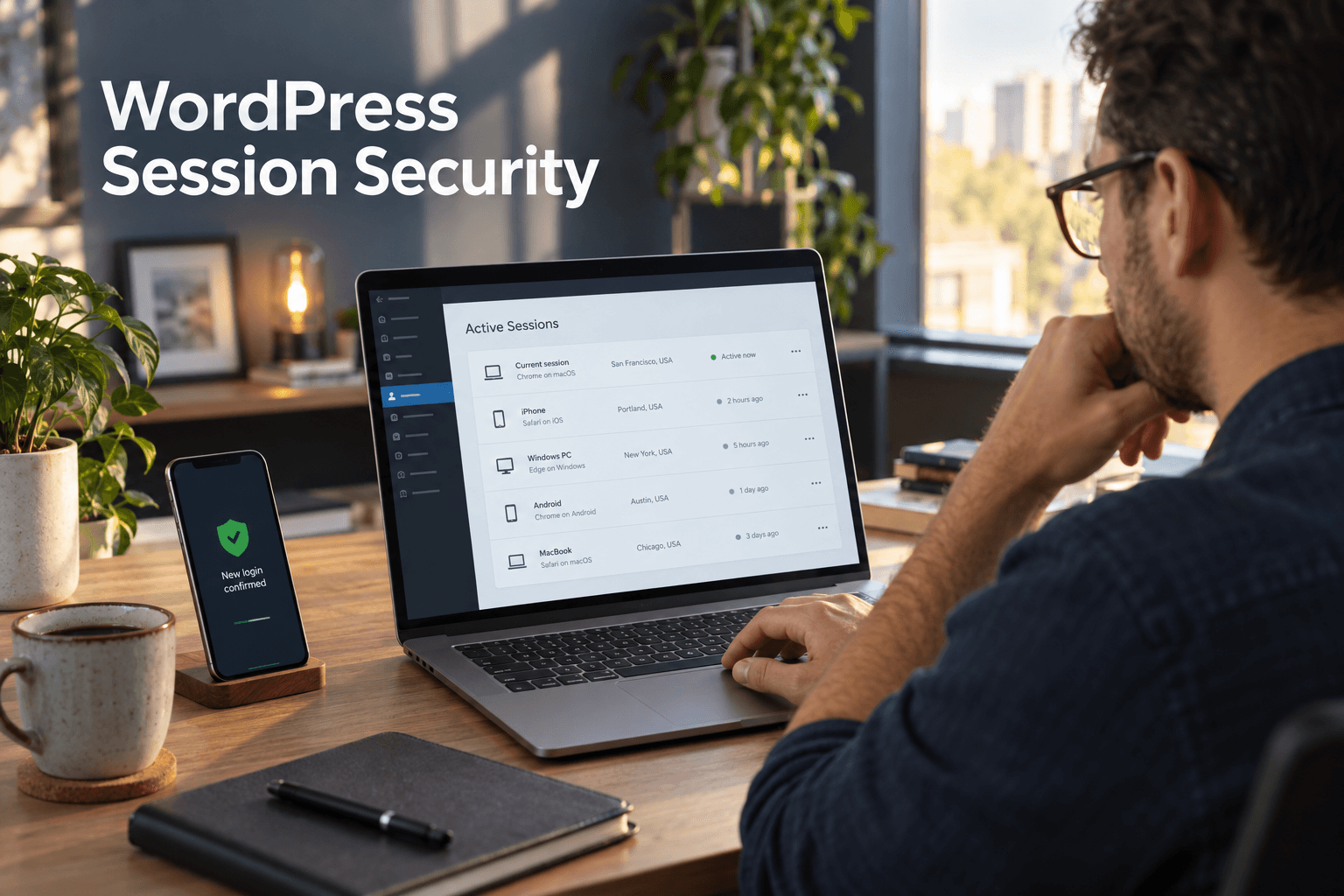
Learn how WordPress sessions work and how to secure cookies, control active devices, revoke access and reduce account takeover risk.
Artikel lesen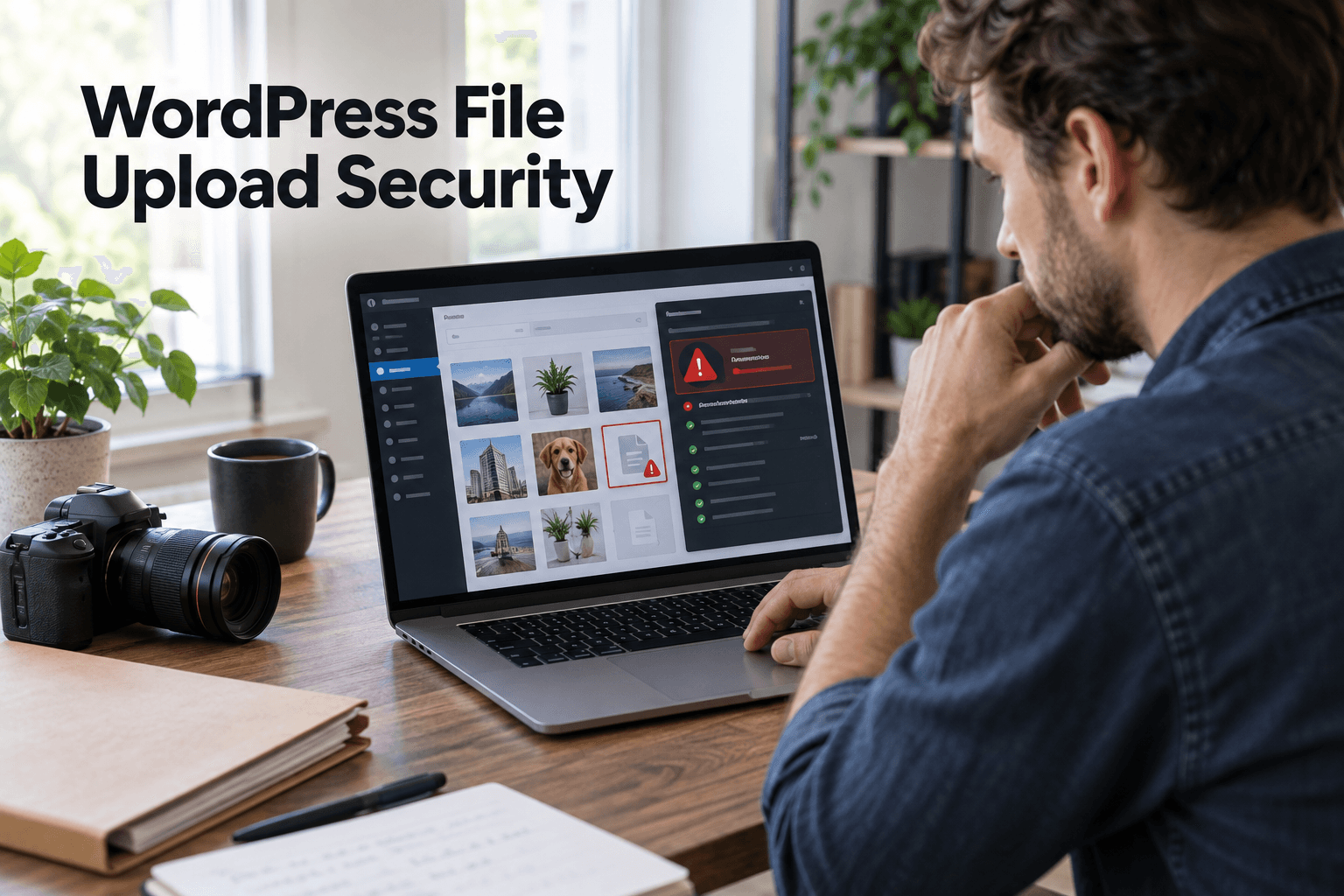
Protect WordPress media, forms and user uploads with allowlists, server-side validation, safer storage, scanning and monitoring.
Artikel lesen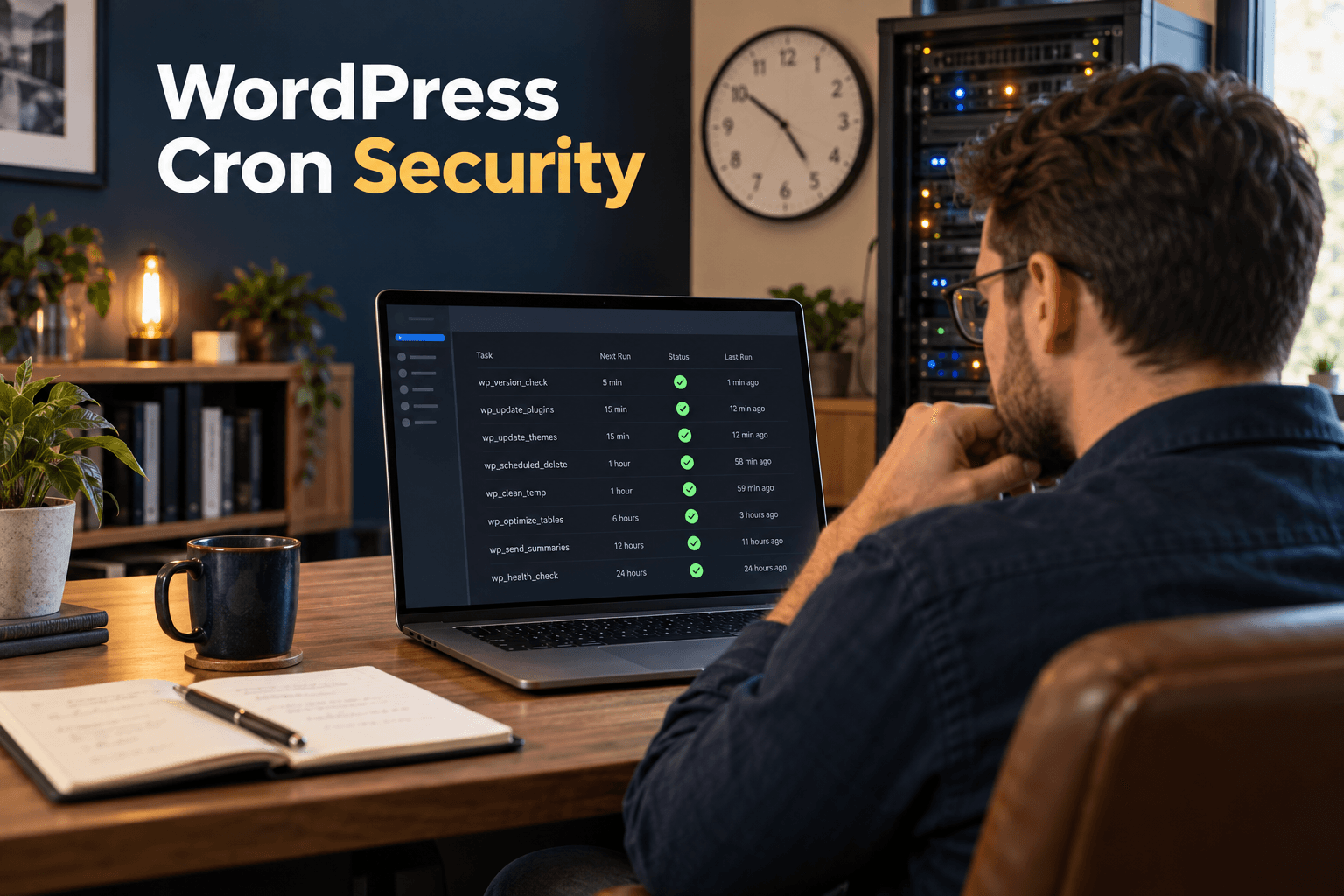
Secure WordPress cron jobs by auditing scheduled hooks, using reliable server scheduling, limiting abuse and monitoring failures.
Artikel lesenAbonnieren Sie neue Artikel zu Website-Entwicklung, technischem SEO und Automatisierung.
Buchen Sie ein kostenloses, unverbindliches Strategiegespräch und wir planen gemeinsam Ihren nächsten Schritt.