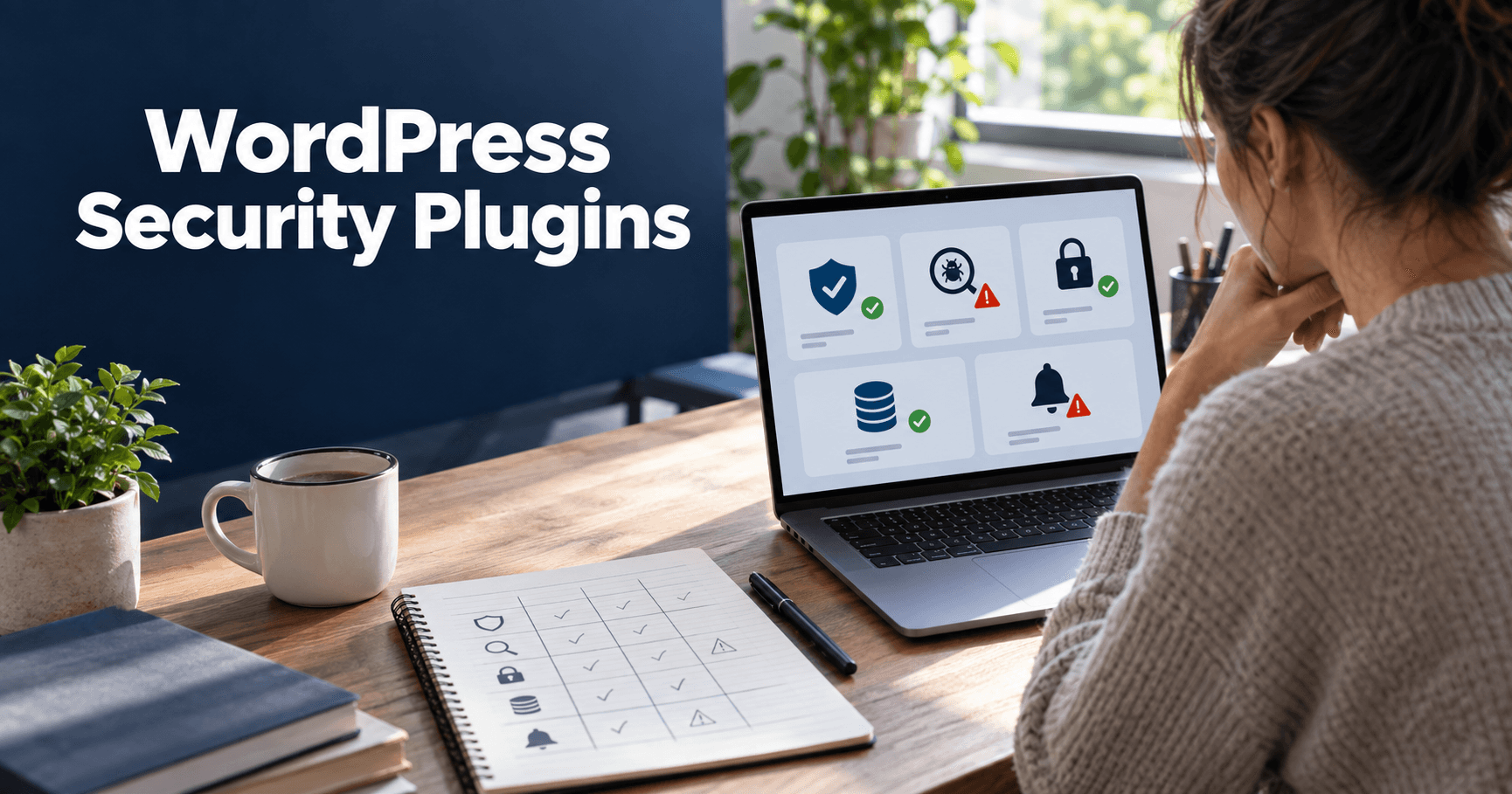
A security plugin can add useful controls, but installing the most feature-heavy option is not the same as securing a website. Firewalls, scanners, login limits, file monitoring, and alerts solve different problems, and some capabilities may already exist at the hosting or CDN layer.
This guide helps you choose the functions you actually need, avoid overlapping tools, test performance, and understand where plugin protection ends.
Start with risks, not feature counts
Identify the site’s assets and likely failure modes. An online store cares about account takeover, payment-page tampering, customer data, and uptime. A publishing site may prioritize editor access, content integrity, and spam. A brochure site still needs patching, backups, and recovery.
Map each risk to a control and an owner. If the CDN already blocks malicious requests, the host performs server-side malware scanning, and a monitoring service watches file changes, another all-in-one plugin may duplicate work.
Use the to identify real gaps before selecting a product.
Core capabilities to evaluate
- Login protection: rate limiting, two-factor authentication, session visibility, and account-change alerts.
- Firewall controls: where requests are blocked, how rules update, and whether cached or server-level traffic is covered.
- Malware scanning: files, database, scheduled tasks, external pages, and the quality of explanations.
- File-integrity monitoring: a trustworthy baseline, expected-change handling, and actionable alerts.
- Vulnerability monitoring: current component inventory and clear remediation guidance.
- Audit logging: useful events, retention, access, exports, and privacy implications.
No plugin sees the entire environment. Application-level code may not detect a compromised hosting account, malicious server process, stolen DNS access, or another infected site sharing the same account.
Avoid overlapping controls
Running multiple plugins that each inspect every request or scan every file can increase CPU, memory, database writes, and false alerts. Two login-limit systems may lock users out unpredictably, while duplicate firewall rules make troubleshooting difficult.
Assign one primary tool or layer to each responsibility. Document what is handled by the CDN, host, server, WordPress, and external monitoring. Keep a rollback plan and test backups before changing a mature security configuration.
Premier Sol’s can design the layers around the site and hosting environment instead of stacking duplicate plugins.