
AI Integration & Chatbot Development
Connect Claude, ChatGPT, or Gemini to your website. We build custom AI chatbots, RAG knowledge systems, MCP integrations, and AI-powered workflows for WordPress and Next.js platforms.
Performance figures, response times, and support examples on this page depend on the project. Final targets, coverage, and acceptance criteria are agreed in writing before work begins.
AI is no longer a novelty — it's the fastest way to cut support costs, qualify leads around the clock, and automate work your team does by hand. But bolting a generic chatbot widget onto your site isn't AI integration. We engineer custom AI systems that know your business: trained on your content, connected to your tools, and built into your WordPress or Next.js platform properly.
What We Build
- Custom AI chatbots (RAG) — assistants trained on your docs, products, and policies that answer customer questions accurately instead of hallucinating, with human handoff when needed.
- LLM API integration — Claude, OpenAI, and Gemini APIs wired into your existing website or application: content workflows, smart search, summarization, classification, and more.
- WordPress + AI (MCP) — connect AI assistants directly to your WordPress or Sanity CMS via the Model Context Protocol, so content creation, publishing, and site management can be safely automated.
- AI-powered workflow automation — n8n pipelines with AI steps: lead enrichment and scoring, ticket triage, review responses, report generation, and email drafting.
- AI agent development — multi-step agents that research, decide, and act across your tools, with guardrails, logging, and cost controls built in.
Why Premier Solutions for AI Work
We use these tools daily in our own operations — our content pipeline, client reporting, and site monitoring all run on AI-assisted n8n automations we built ourselves. That matters: most agencies selling AI integration have never shipped one. We know where LLMs fail, what they cost at scale, and how to design systems that stay reliable after the demo.
How a Project Works
Every engagement starts with a scoping call where we map the workflow you want to automate and define what success looks like in numbers (tickets deflected, hours saved, leads qualified). You get a fixed-scope proposal with cost estimates including ongoing API usage — no open-ended billing. We build in a staging environment, test against real scenarios, then deploy with monitoring and a handover session for your team. Pilot integrations are deliberately scoped small so you can validate value quickly before committing to a larger build.
Related services and insights
Continue exploring: the Model Context Protocol guide, AI agents, LLMs, and RAG explained and connecting Claude, Gemini, and GPT to WordPress.
What the service covers
Custom AI Chatbot Development
Conversational assistants built around your documentation, product catalog and support knowledge base, so customers get answers drawn from your own content, 24/7. Output guardrails are defined during the build to keep responses on topic.
LLM API Integration (GPT, Gemini, Claude)
Connecting your web application to leading large language model APIs for content generation, summarization, classification, and intelligent search — with proper prompt engineering and output guardrails.
RAG (Retrieval-Augmented Generation) Pipelines
Building context-aware AI systems that retrieve information from your proprietary data sources before generating responses — dramatically reducing hallucination and improving answer accuracy.
AI-Powered Content & Workflow Automation
Automating content drafting, email response generation, lead qualification, and data extraction using fine-tuned AI models integrated directly into your existing tools and workflows.
What the work aims to improve
Automated Support with Human Escalation
Always-On SupportAn AI chatbot grounded in your knowledge base can answer routine inquiries at any hour, freeing your human team to focus on complex, high-value interactions. Answer quality depends on the quality and coverage of the source content.
Less Repetitive Work
Lower Support LoadAutomating suitable content, data-processing, and support tasks can reduce repetitive work and help teams focus on higher-value interactions.
Competitive Differentiation
Focused Use CasesWell-scoped AI features, such as faster answers, more relevant content and less manual handling of routine work, can improve how customers experience your business. We start by identifying which use cases are worth building first.
How the work is delivered
Use Case Definition & Data Audit
Identifying the highest-impact AI use cases for your business and auditing the quality, structure, and accessibility of your existing data sources.
Model Selection & Pipeline Architecture
Choosing the right LLM for your use case (OpenAI, Google Gemini, Anthropic Claude, or open-source alternatives), designing the RAG pipeline, and defining prompt templates and output guardrails.
Development & Testing
Building the integration layer, indexing your own content so the assistant answers from it, implementing feedback loops, and testing against edge cases and adversarial inputs.
Deployment & Refinement
Production deployment with monitoring dashboards and conversation analytics, plus a review of real user interactions to refine prompts and source content.
Before we start
- Share the starting point
- Send your website URL, platform, the problem to solve, and any deadline or budget constraints. An existing site may need an assessment before a solution can be recommended.
- Agree what is included
- Confirm deliverables, exclusions, dependencies, and pricing before work begins. Hosting, paid tools, content entry, and ongoing support should be discussed separately when needed.
- Define acceptance checks
- Agree which pages, devices, integrations, and measurements will be checked. Compare results with a documented baseline where performance or search work is involved.
- Plan access and handover
- Discuss account ownership, the access needed for delivery, documentation, and any training or maintenance arrangements. Confirm ongoing support in the written scope.
Please do not send passwords, API keys, or customer records through the inquiry form or chat.
Frequently Asked Questions
Will the AI chatbot hallucinate or give wrong answers?
RAG grounds responses in approved documentation, while guardrails, confidence thresholds, testing, and human escalation reduce errors. It does not eliminate hallucinations, so high-impact answers should still be reviewed or routed to a person.
Can the AI integrate with our existing CRM and support tools?
Yes. We build integrations with HubSpot, Salesforce, Zendesk, Intercom, and custom CRM platforms — so AI interactions are logged, routed, and escalated through your existing workflows.
What is RAG, and why does my chatbot need it?
RAG — retrieval-augmented generation — means the AI answers from your actual content rather than its general training data. Your documentation, product pages, and policies are indexed, and when a user asks a question the system retrieves the relevant passages and has the model answer from them. This is what separates a chatbot that accurately reflects your business from one that invents plausible-sounding answers, which is the single biggest risk in deploying AI on a customer-facing site.
How much does it cost to run an AI chatbot on my site?
Costs fall into build and running. The build cost depends on integration complexity and how much content needs indexing. Running costs are usage-based charges from the model provider, which scale with conversation volume and the model chosen. We estimate expected running costs during scoping, before you commit.
How do you stop an AI chatbot from giving wrong answers?
Grounding the model in your own content through RAG is the primary control, since the model answers from retrieved passages rather than memory. Beyond that we set explicit scope boundaries so the assistant declines questions outside its remit rather than improvising, and we implement escalation to a human for anything it cannot answer confidently. No system is perfect, and we will tell you plainly which question types warrant a human handoff rather than overselling the automation.
Can you integrate AI into an existing WordPress or Next.js site?
Yes. We build AI integrations for both WordPress and Next.js, and connect them to the systems behind your site — CRM, helpdesk, order management, or internal knowledge bases — through their APIs. This is usually where the real value sits: an assistant that can look up an actual order status is substantially more useful than one that can only answer general questions.
Which AI model do you use — Claude, ChatGPT, or Gemini?
We work with Claude, GPT, and Gemini, and select based on the task rather than brand preference — they differ meaningfully in reasoning depth, context handling, latency, and cost per token. We also build so the provider can be swapped without rewriting your application, which matters in a field where the capability and pricing landscape shifts every few months.
Explore published projects
View All Projects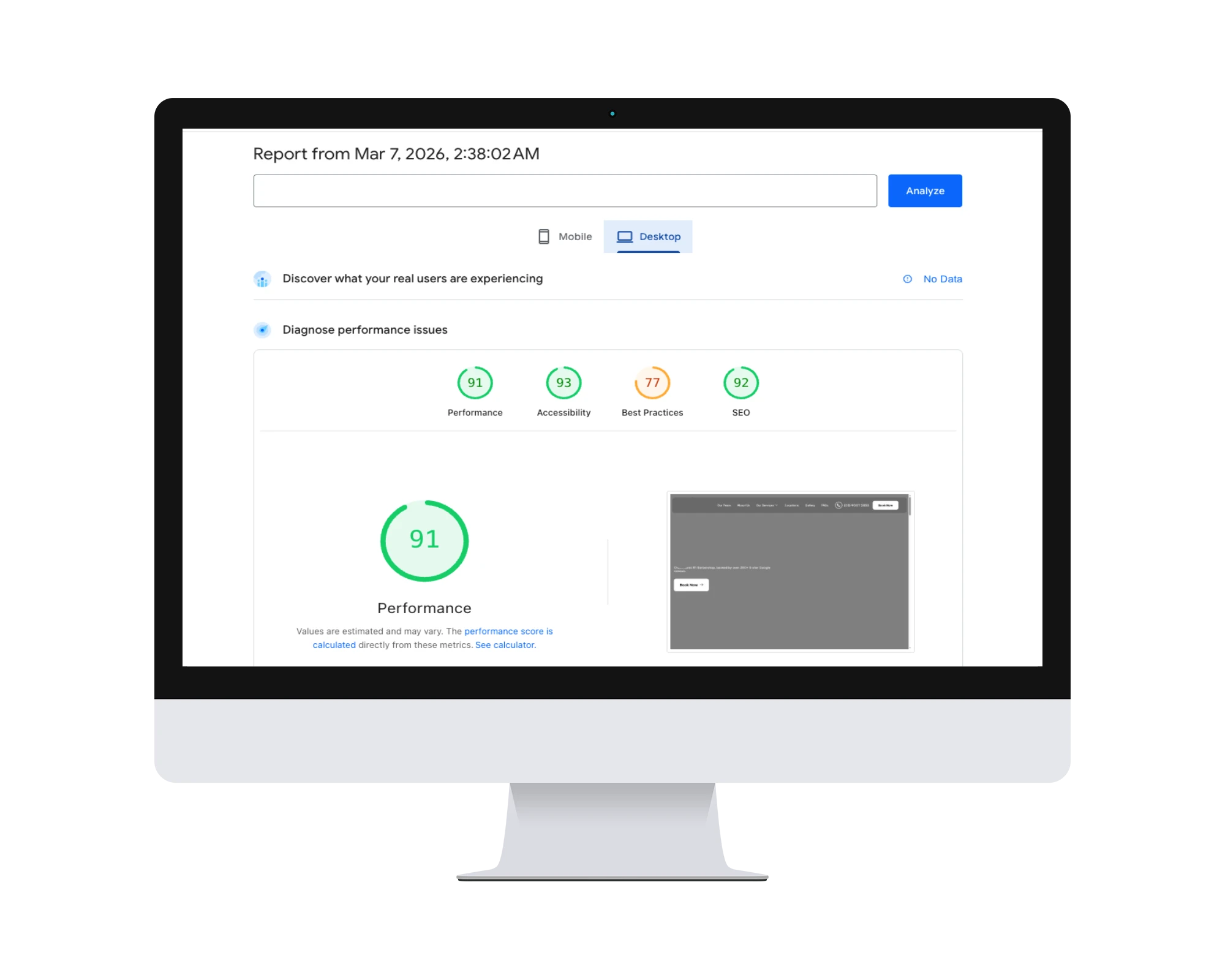
WordPress Speed Optimization: Rescuing a Sub-20 Desktop Score
Premier Solutions rescued a WordPress site failing desktop speed tests (under 20/100) using next-gen WebP images, multi-tiered caching, and JS minification to deliver top-tier Core Web Vitals.
View Case Study
WordPress Security Recovery: Complete Malware Removal & Hardening
A WordPress malware-recovery case study covering spam removal, rogue administrators, clean-file restoration and post-cleanup hardening.
View Case Study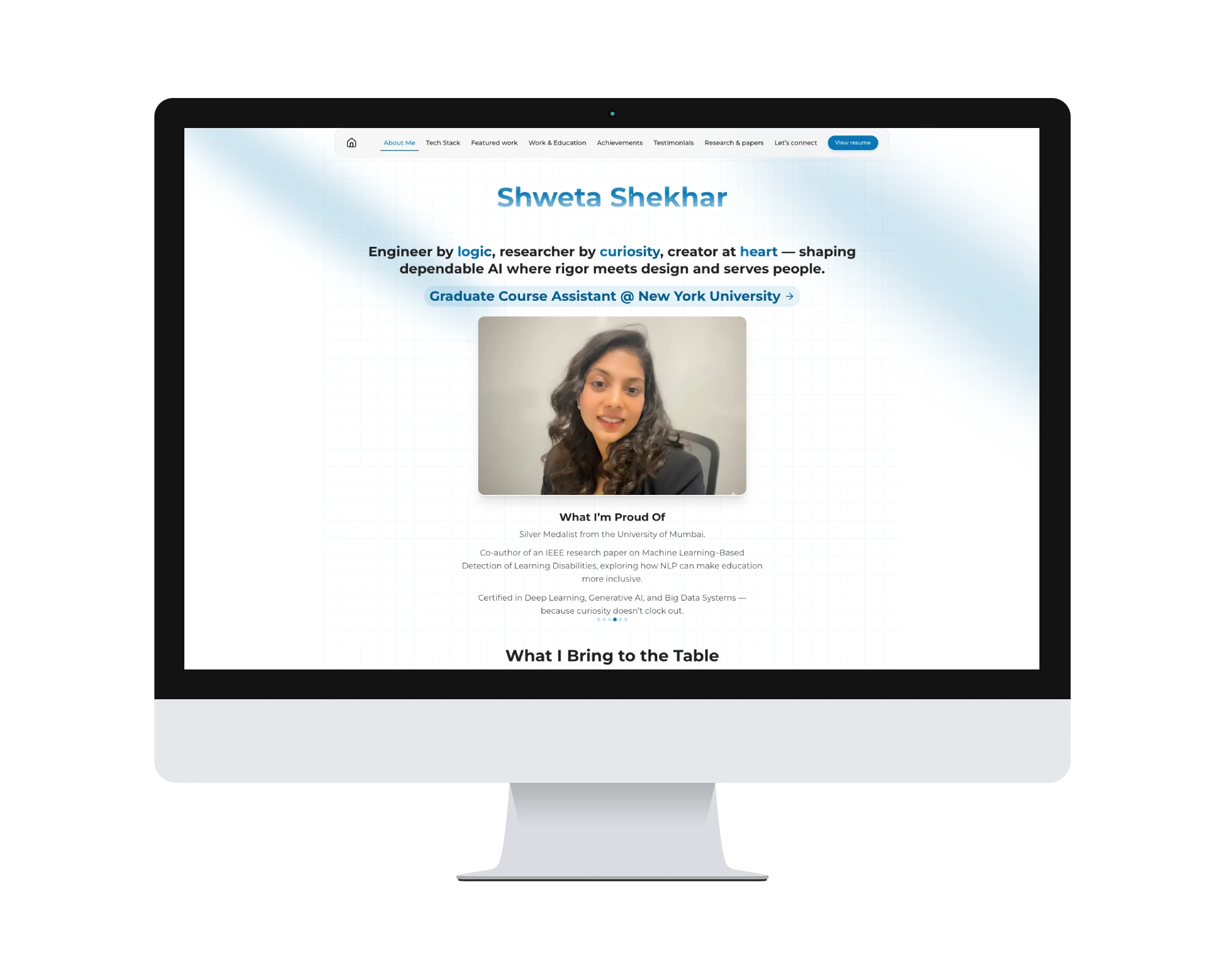
High-Performance Single-Page Portfolio: Next.js & React.js Development
Premier Solutions engineered a fast, single-page personal portfolio with Next.js and React.js — a responsive, highly optimized digital presence with an app-like experience.
View Case StudyExplore our services

AI Search Optimization (AEO & GEO)
Improve how search and AI answer engines understand your website through crawlability, clear content, relevant structured data, and consistent business information.
Learn More
WordPress Maintenance & Care Plans
Monthly WordPress maintenance with tested updates, security monitoring, daily backups, uptime checks and priority support.
Learn More
Emergency Hacked WordPress Site Recovery
Recover a hacked WordPress site with malware removal, rogue-account review, clean-file restoration, and security hardening. Scope, pricing, and timing follow assessment.
Learn More