
Custom API & Backend Development
Secure, scalable API and backend development: custom REST/GraphQL APIs, database design, authentication, cloud infrastructure, and system integrations that power your applications.
Performance figures, response times, and support examples on this page depend on the project. Final targets, coverage, and acceptance criteria are agreed in writing before work begins.
A beautiful frontend means nothing if the backend behind it is slow, fragile, or insecure. The backend is the engine: it processes requests, manages your data, handles authentication, and connects your systems. When it's built poorly, you get slow load times, server crashes during traffic spikes, data silos, and security vulnerabilities. We build backends and APIs that are fast, secure, and designed to scale with your business.
What We Build
- Custom RESTful and GraphQL APIs — the connective tissue between your frontend, mobile apps, third-party services, and internal tools. We build, document (Swagger/OpenAPI), and version APIs that other developers can work with confidently.
- Database design and optimization — relational databases (PostgreSQL, MySQL) for structured data with strict integrity, NoSQL (MongoDB, Firebase) for flexible unstructured data, and migration services for moving off legacy systems without data loss.
- Authentication and security — OAuth 2.0, JWT, role-based access control, rate limiting, input validation, and end-to-end encryption. Security is built into every layer, not bolted on. For WordPress-specific security, see our WordPress security services.
- Cloud infrastructure and DevOps — serverless architecture, CI/CD pipelines for zero-downtime deployments, and monitoring/alerting so you know about issues before your users do.
- Third-party integrations — payment processors (Stripe, PayPal), CRMs (Salesforce, HubSpot), mapping services, and n8n automation workflows that connect your backend to your operational tools.
- Microservices redesign — breaking monolithic applications into independently deployable services for better fault isolation, faster development cycles, and easier scaling.
How We Work
We start with architecture design: mapping your data flows, defining API endpoints, and identifying bottlenecks before writing code. Development follows clean, modular patterns with comprehensive documentation. Every build goes through security testing (input validation, rate limiting, stress testing under simulated load) before deployment. After launch, we set up real-time monitoring and stay on as a technical partner for ongoing support and iteration.
Related services and insights
Continue exploring: custom web application development and the ProxiesThatWork Next.js case study.
What the service covers
RESTful & GraphQL API Design
Well-documented APIs with versioning, pagination, rate limiting, and authentication — following OpenAPI 3.0 specification standards for seamless frontend and third-party integration.
Database Architecture & Optimization
Schema design, index optimization, query performance tuning, and migration scripts for PostgreSQL, MySQL, MongoDB, and Redis — built for correctness first, speed second.
Authentication & Authorization Systems
JWT-based auth, OAuth2 flows, role-based access control (RBAC), and multi-tenant architectures — securing your API endpoints against unauthorized access at every layer.
Background Jobs & Queue Processing
Asynchronous task processing for email sending, report generation, data imports, and webhook deliveries using BullMQ, Redis, or serverless functions.
What the work aims to improve
Clean, Documented API Contracts
OpenAPI DocumentedAuto-generated OpenAPI documentation, consistent error responses, and typed client SDKs — so frontend developers and third-party integrators can work independently and efficiently.
Horizontal Scalability
Designed to ScaleStateless API design, connection pooling, caching layers and queue-based processing are built in from the start, so the backend is designed to absorb traffic spikes without an architectural rewrite. We agree expected load targets in the scope and load-test against them before launch.
Reduced Integration Friction
Developer FriendlyWell-structured APIs with consistent naming conventions, predictable pagination and clear error handling make integrations faster and less error-prone for the teams that consume them.
How the work is delivered
API Specification & Data Modeling
Defining resource schemas, endpoint contracts, authentication requirements, and database entity relationships in a collaborative specification document.
Backend Development & Testing
Building API routes, database queries, business logic, and validation layers — with unit tests, integration tests, and end-to-end test coverage.
Security Audit & Load Testing
Input validation, SQL injection prevention, rate limiting, CORS configuration, and load testing to verify performance under expected traffic volumes.
Deployment & Monitoring
Containerized deployment (Docker), structured logging, health check endpoints, error tracking (Sentry), and performance monitoring (New Relic or Datadog).
Before we start
- Share the starting point
- Send your website URL, platform, the problem to solve, and any deadline or budget constraints. An existing site may need an assessment before a solution can be recommended.
- Agree what is included
- Confirm deliverables, exclusions, dependencies, and pricing before work begins. Hosting, paid tools, content entry, and ongoing support should be discussed separately when needed.
- Define acceptance checks
- Agree which pages, devices, integrations, and measurements will be checked. Compare results with a documented baseline where performance or search work is involved.
- Plan access and handover
- Discuss account ownership, the access needed for delivery, documentation, and any training or maintenance arrangements. Confirm ongoing support in the written scope.
Please do not send passwords, API keys, or customer records through the inquiry form or chat.
Frequently Asked Questions
What backend technologies do you specialize in?
Our primary backend stack is Node.js (Express/Fastify) with TypeScript, PostgreSQL for relational data, and Redis for caching and queues. For serverless workloads, we use Vercel Edge Functions and AWS Lambda.
Can you build APIs that integrate with our legacy systems?
Yes. We frequently build adapter layers and middleware that bridge modern API standards with legacy databases, SOAP services, and proprietary data formats.
Should we build a REST or GraphQL API?
REST is simple, widely understood, and well suited to straightforward resource-based operations — the right default for most projects. GraphQL earns its added complexity when clients need to fetch varied, deeply nested data in a single request, or when multiple different front ends consume the same API with different data requirements. Choosing GraphQL for a simple CRUD API usually adds tooling and caching complexity without a corresponding benefit.
How do you secure an API?
Authentication and authorisation appropriate to the risk, input validation and parameterised queries to prevent injection, rate limiting to prevent abuse and runaway costs, HTTPS throughout, and secrets held in environment configuration rather than committed to the repository. We also implement structured logging and error monitoring, because an API you cannot observe is one you cannot debug when it matters most — under load, in production.
Can you build an API that handles high traffic?
Real scale planning means understanding where your specific bottleneck will appear, which is usually the database rather than the application layer. We design schemas and indexes for your actual query patterns, add caching where it demonstrably helps, and build stateless services that scale horizontally. We do not over-engineer for hypothetical volume — architecture built for imagined scale you never reach is a real and common cost.
Can you integrate our backend with third-party systems?
Yes, and this is frequently the most valuable part of a backend engagement. We build integration layers that normalise inconsistent third-party responses into a single internal schema, with retry logic, idempotency handling, and failure logging. The difference between a robust integration and a fragile one is almost entirely in how it behaves when the upstream system is slow, rate-limited, or down — not in how it behaves when everything works.
What affects the cost of custom API and backend development?
Cost depends on the number of endpoints and data models, the number and quality of third-party or legacy integrations, authentication and security requirements, and expected traffic. Documentation and tests are scoped too. We confirm scope, deliverables and price in writing before any build work begins.
Explore published projects
View All Projects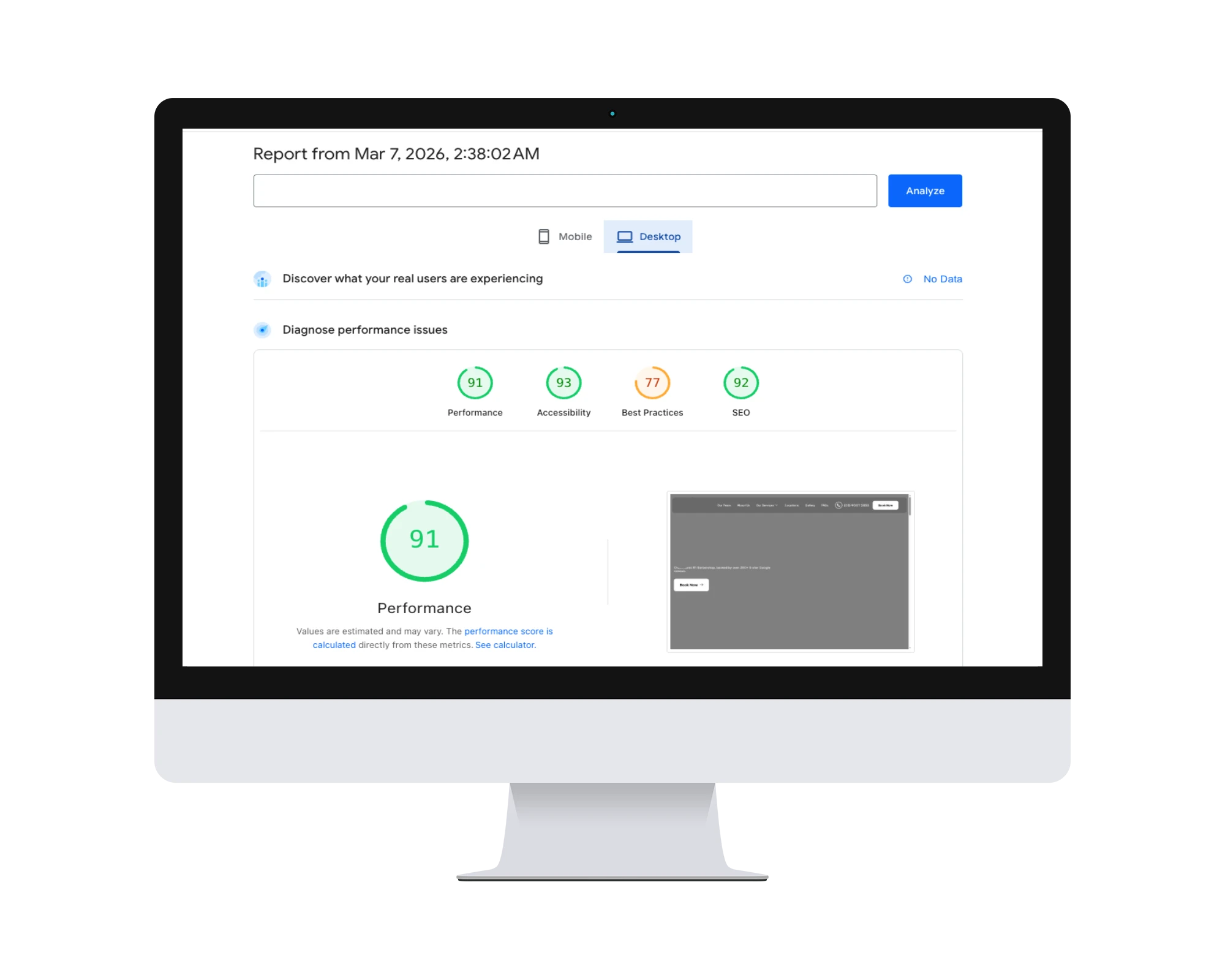
WordPress Speed Optimization: Rescuing a Sub-20 Desktop Score
Premier Solutions rescued a WordPress site failing desktop speed tests (under 20/100) using next-gen WebP images, multi-tiered caching, and JS minification to deliver top-tier Core Web Vitals.
View Case Study
WordPress Security Recovery: Complete Malware Removal & Hardening
A WordPress malware-recovery case study covering spam removal, rogue administrators, clean-file restoration and post-cleanup hardening.
View Case Study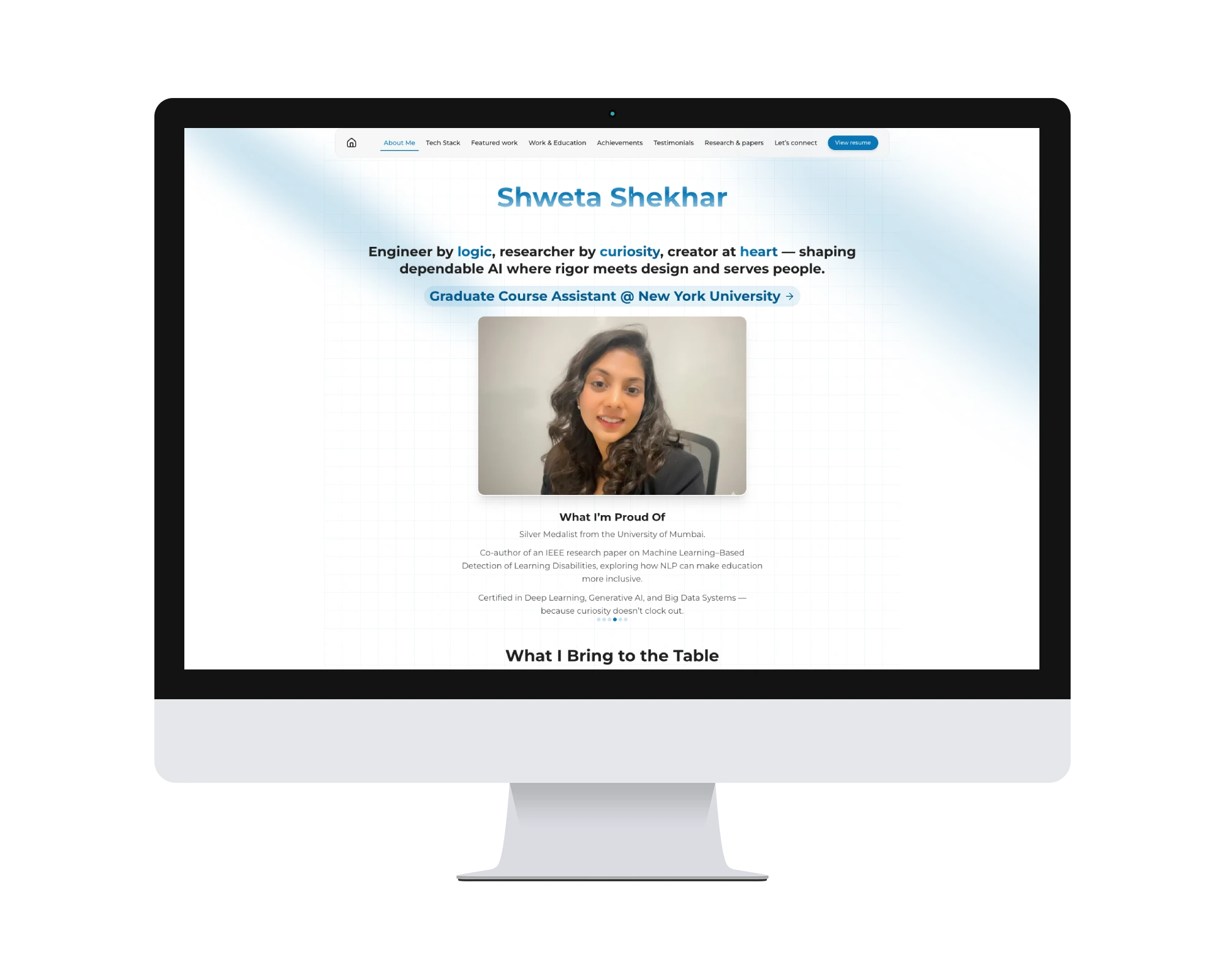
High-Performance Single-Page Portfolio: Next.js & React.js Development
Premier Solutions engineered a fast, single-page personal portfolio with Next.js and React.js — a responsive, highly optimized digital presence with an app-like experience.
View Case StudyExplore our services

AI Search Optimization (AEO & GEO)
Improve how search and AI answer engines understand your website through crawlability, clear content, relevant structured data, and consistent business information.
Learn More
AI Integration & Chatbot Development
Connect Claude, ChatGPT, or Gemini to your website. We build custom AI chatbots, RAG knowledge systems, MCP integrations, and AI-powered workflows for WordPress and Next.js platforms.
Learn More
WordPress Maintenance & Care Plans
Monthly WordPress maintenance with tested updates, security monitoring, daily backups, uptime checks and priority support.
Learn More