
Custom Web & Application Development
Custom web applications for when WordPress and Shopify aren't enough: SaaS platforms, client portals, data-driven tools, and MVPs — built with React, Next.js, and Node.js.
Performance figures, response times, and support examples on this page depend on the project. Final targets, coverage, and acceptance criteria are agreed in writing before work begins.
Not every project fits inside WordPress or Shopify. When you need a custom web application — a SaaS platform, a data-driven portal, an internal tool, or a complex multi-user system — you need an architecture built from scratch around your specific business logic. We engineer custom web applications using modern frameworks like React, Next.js, and Node.js, with clean APIs, secure authentication, and infrastructure that scales.
When Custom Development Is the Right Choice
If your project involves complex user roles and permissions, real-time data processing, third-party API integrations that go beyond what CMS plugins can handle, or a product you'll iterate on for years — a custom-built application gives you the control, performance, and flexibility that template-based platforms can't. For content-driven websites and blogs, WordPress is often the better fit. For online stores, Shopify handles commerce infrastructure you shouldn't rebuild. Custom development is for everything else.
What We Build
- SaaS platforms and web apps — multi-tenant applications with user authentication, dashboards, billing integration, and the API layer to power them.
- Client portals and internal tools — secure, role-based platforms for your team or clients to access data, submit requests, track progress, and manage workflows.
- Data-driven platforms — applications that ingest, process, and display complex datasets: directories, comparison tools, analytics dashboards, and reporting systems.
- MVPs for startups — we help founders go from concept to working product fast, using Next.js for rapid iteration and TypeScript for reliability. Launch, validate, then scale.
- AI-powered applications — custom apps with LLM integration, RAG-based knowledge systems, and intelligent automation. Our AI integration services cover the full spectrum from chatbots to multi-step agents.
Projects We've Delivered
We built ProxiesThatWork — a custom Next.js web application for a proxy purchasing platform with complex API data fetching, dynamic pricing logic, and a responsive UI. We also developed a Figma-to-HTML conversion for AfterSync, translating a pixel-perfect design into clean, production-ready code.
Our Development Process
Every project starts with a discovery and architecture phase: we map your business logic, data flows, and user journeys before writing code. Development runs in iterative sprints with working software at every milestone — not a big reveal at the end. We build mobile-first, test across devices and browsers, run security audits, and stress-test under simulated load. After launch, we provide documentation, training, and ongoing support through our API and backend services.
What the service covers
Full-Stack Web Application Development
End-to-end development using modern frameworks — Next.js, React, Node.js — with server-side rendering, API routes, and database integration. No templates, no shortcuts.
Responsive, Accessible Design Implementation
Responsive interfaces built to meet WCAG 2.1 AA. Semantic HTML, ARIA labels, keyboard navigation and focus management are built in from the start, not bolted on after. Full conformance also depends on content and third-party components.
API & Third-Party Integration
RESTful API development, GraphQL endpoints, OAuth2 authentication flows, and integration with CRMs, payment gateways, analytics platforms, and enterprise systems.
CI/CD Pipeline & DevOps
Automated testing, staging deployments, and production releases through GitHub Actions or Vercel. Every code change is linted, tested, and reviewed before it reaches production.
What the work aims to improve
Tailored to Your Business Logic
Built for YouOff-the-shelf templates and SaaS tools bend your workflow to fit their limitations. Custom development bends the technology to fit your workflow exactly.
Performant by Architecture
Performance-FirstServer-side rendering, static generation, edge caching, and optimized database queries are architectural decisions, not afterthought patches. Performance is a feature, not a fix.
Scalable from Day One
Modular ArchitectureModular architecture with clear separation of concerns, so new features, pages and integrations can usually be added without refactoring the existing codebase.
How the work is delivered
Requirements Analysis & Scoping
Detailed discovery sessions to define functional requirements, technical constraints, user stories, and success metrics before any code is written.
Architecture & Design
System architecture decisions (framework, database, hosting, API structure) and high-fidelity UI/UX design — reviewed and approved by your team.
Agile Development Sprints
Two-week development cycles with working demos at the end of each sprint. Your feedback is incorporated continuously, not saved for a big-bang reveal.
Testing, Launch & Handover
Automated testing, cross-browser QA, load testing, security audit, and production deployment — followed by thorough documentation and team training.
Before we start
- Share the starting point
- Send your website URL, platform, the problem to solve, and any deadline or budget constraints. An existing site may need an assessment before a solution can be recommended.
- Agree what is included
- Confirm deliverables, exclusions, dependencies, and pricing before work begins. Hosting, paid tools, content entry, and ongoing support should be discussed separately when needed.
- Define acceptance checks
- Agree which pages, devices, integrations, and measurements will be checked. Compare results with a documented baseline where performance or search work is involved.
- Plan access and handover
- Discuss account ownership, the access needed for delivery, documentation, and any training or maintenance arrangements. Confirm ongoing support in the written scope.
Please do not send passwords, API keys, or customer records through the inquiry form or chat.
Frequently Asked Questions
When should I choose custom development over a template or SaaS tool?
Custom development makes sense when your requirements don't fit neatly into an existing platform's feature set, when you need full control over the user experience, or when scalability and performance are critical business requirements.
What technologies do you use for custom projects?
Our primary stack is Next.js (React) with TypeScript, Tailwind CSS v4, and Sanity CMS for content management. For backend-heavy applications, we use Node.js, PostgreSQL, and Redis. Technology choices are always driven by project requirements, not personal preference.
How do I know if I need a custom application instead of WordPress or Shopify?
WordPress and Shopify are excellent at what they do — content publishing and standard retail. You have outgrown them when your requirements stop looking like content or catalogue: complex user roles and permissions, real-time data, heavy calculation, multi-tenancy, workflow automation across systems, or an interface users work in daily rather than browse. If you are fighting the platform to achieve something it was never designed for, a custom build is usually cheaper over three years than continuing to force it.
How much does custom web application development cost?
Custom applications vary far more widely than websites because scope drives everything. A focused MVP with a clear feature set is a substantially smaller undertaking than a multi-role SaaS platform with billing, integrations, and an admin system. We scope in phases: a discovery engagement produces a technical specification and a fixed-price estimate, so you can make a build decision with real numbers rather than a guess.
Can you build an MVP for a startup?
We build an MVP around the smallest set of features that delivers genuine value to a real user, then expand from evidence rather than assumption. The most common and expensive mistake in MVP work is building everything the roadmap imagines before anyone has used the product. We will actively push back on scope that can wait — that is usually the difference between launching and stalling.
Do I own the code, and can another team take it over later?
You own the code, the repository, and the infrastructure accounts. We build on mainstream, well-supported technologies — React, Next.js, Node.js, standard databases — specifically so any competent development team can take over. We provide documentation, architecture notes, and a handover walkthrough. Building in deliberate dependency on one agency is a business model we have chosen not to have.
Can the application integrate with our existing systems?
Yes — integration is often the main reason a custom build is commissioned. We connect to CRMs, ERPs, payment providers, and internal systems through their APIs, with authentication, retry logic, and failure logging handled properly rather than assumed to always succeed. Where a system has no API, we look at database-level or file-based integration and will tell you honestly if the connection would be fragile.
Explore published projects
View All Projects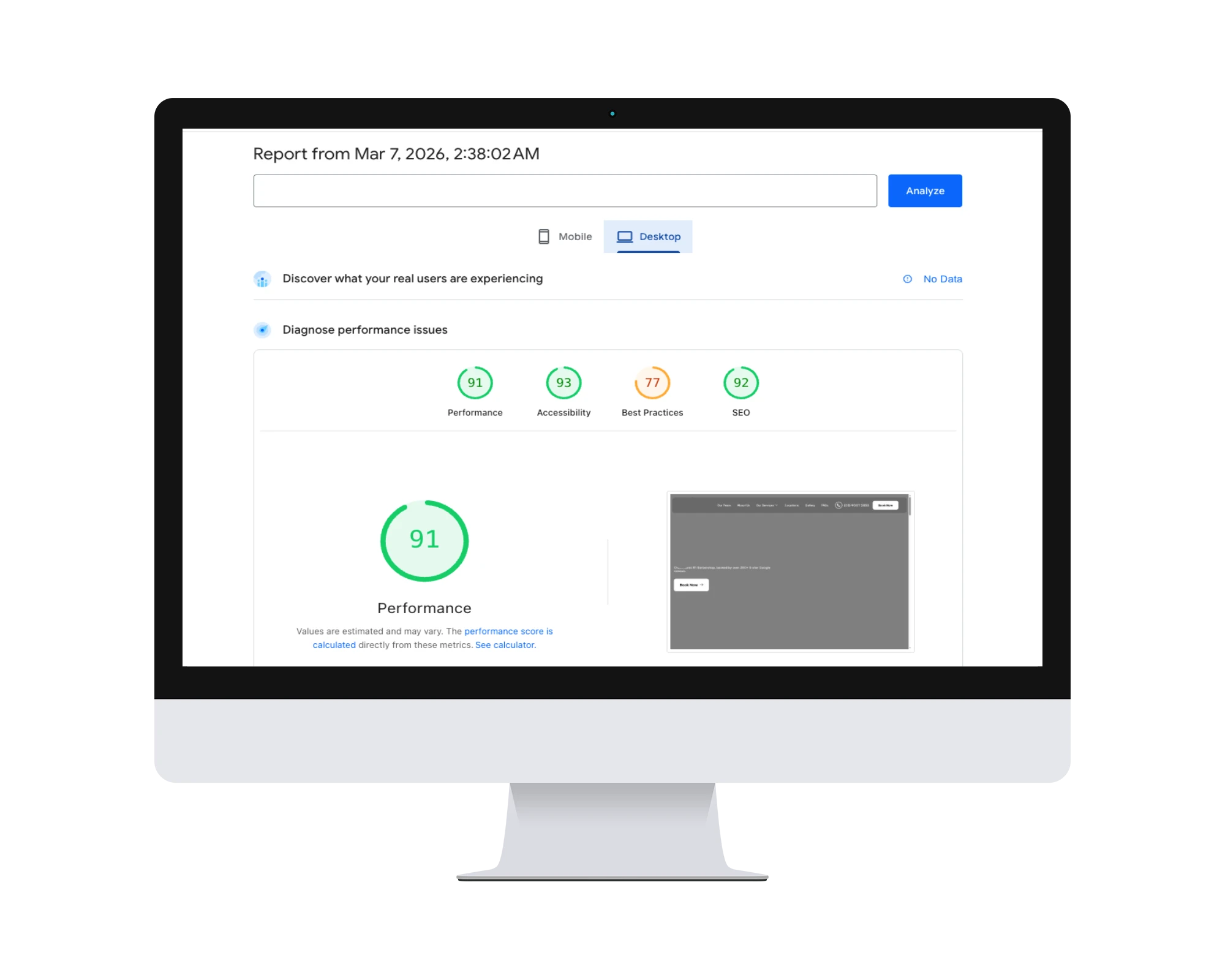
WordPress Speed Optimization: Rescuing a Sub-20 Desktop Score
Premier Solutions rescued a WordPress site failing desktop speed tests (under 20/100) using next-gen WebP images, multi-tiered caching, and JS minification to deliver top-tier Core Web Vitals.
View Case Study
WordPress Security Recovery: Complete Malware Removal & Hardening
A WordPress malware-recovery case study covering spam removal, rogue administrators, clean-file restoration and post-cleanup hardening.
View Case Study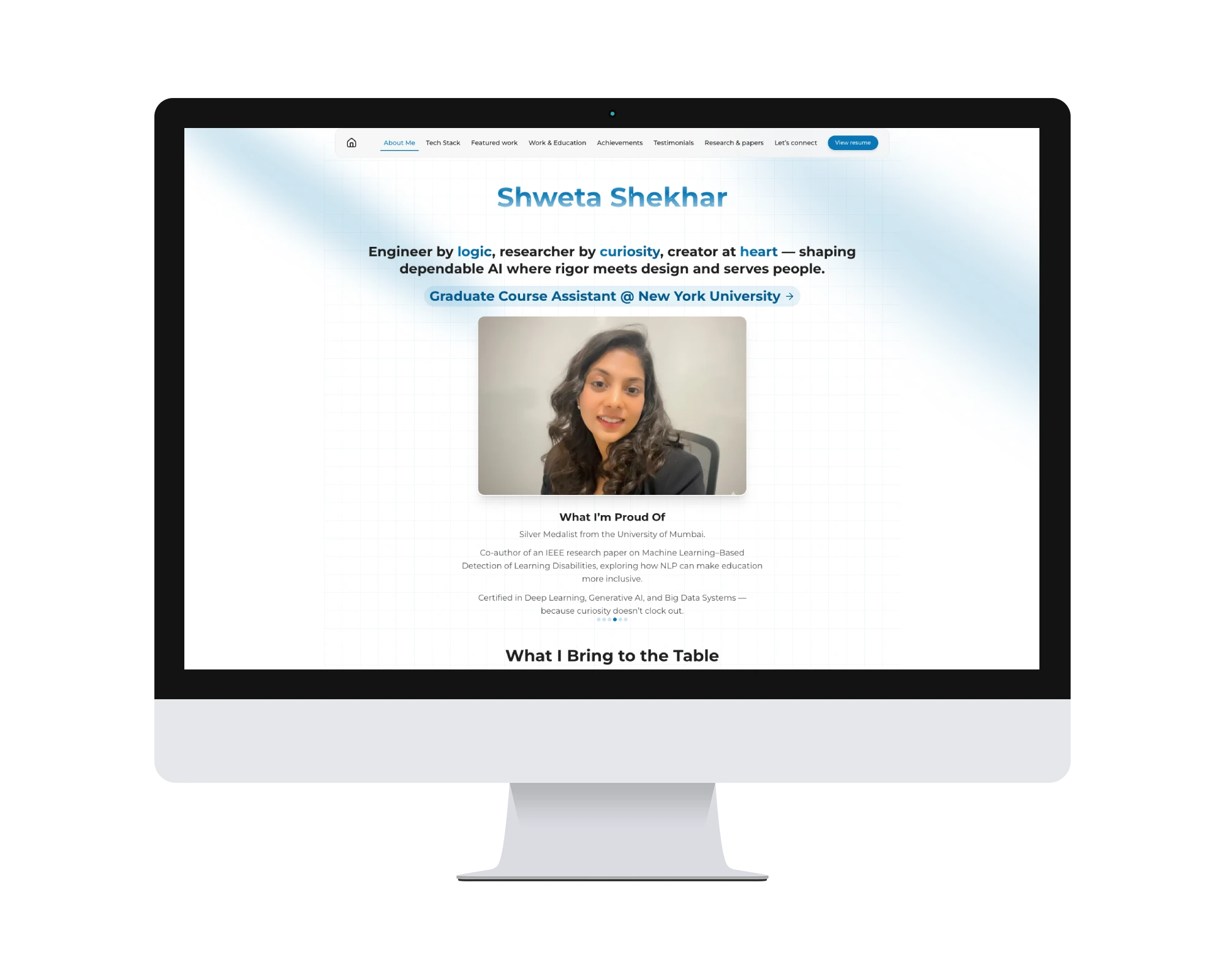
High-Performance Single-Page Portfolio: Next.js & React.js Development
Premier Solutions engineered a fast, single-page personal portfolio with Next.js and React.js — a responsive, highly optimized digital presence with an app-like experience.
View Case StudyExplore our services

AI Search Optimization (AEO & GEO)
Improve how search and AI answer engines understand your website through crawlability, clear content, relevant structured data, and consistent business information.
Learn More
AI Integration & Chatbot Development
Connect Claude, ChatGPT, or Gemini to your website. We build custom AI chatbots, RAG knowledge systems, MCP integrations, and AI-powered workflows for WordPress and Next.js platforms.
Learn More
WordPress Maintenance & Care Plans
Monthly WordPress maintenance with tested updates, security monitoring, daily backups, uptime checks and priority support.
Learn More