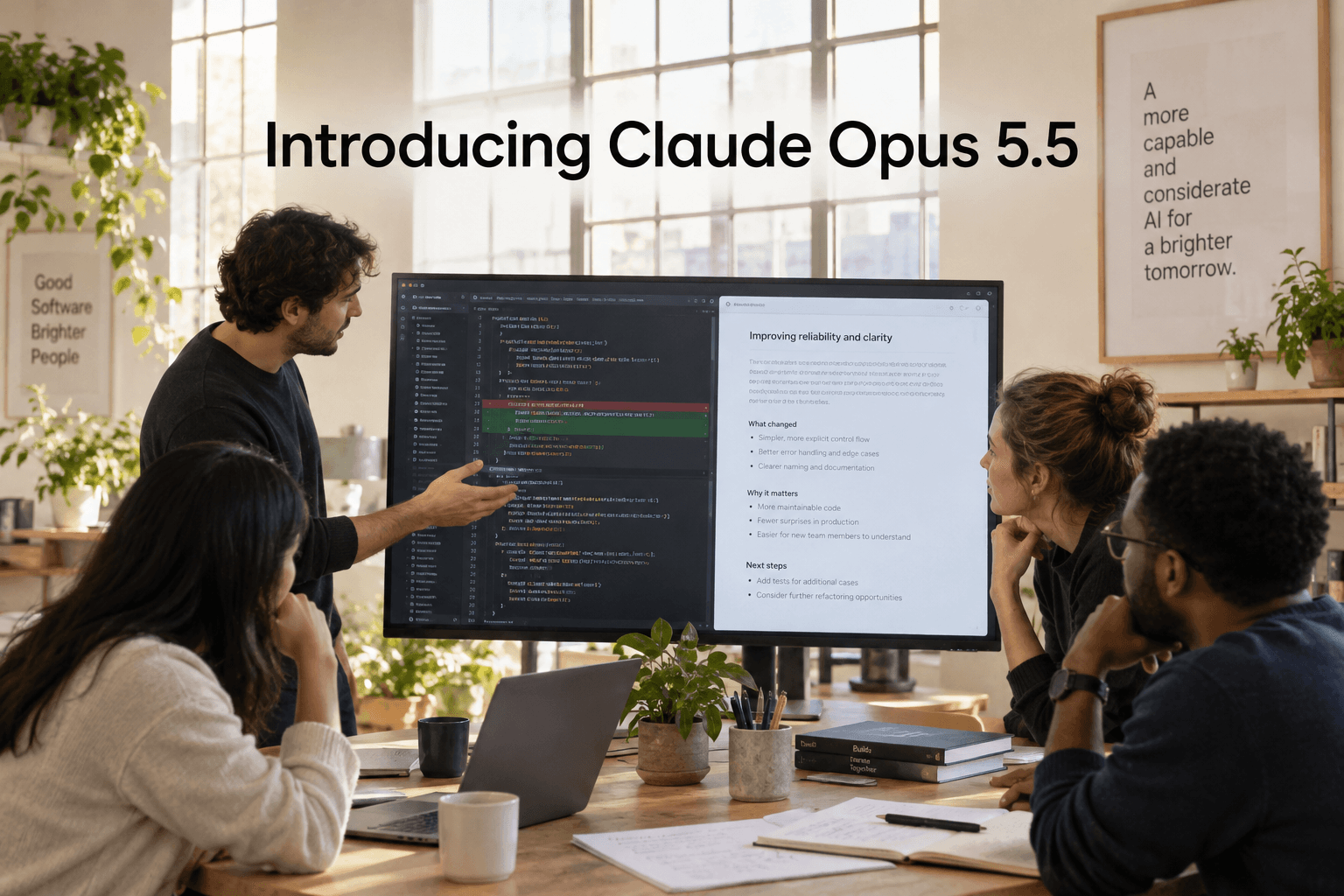
A model announcement can tell you what to investigate. It cannot tell you how the model will handle your oldest integration, your test setup, or a requirement that was never written down.
Before changing your team's default coding tool, run a small evaluation on work that resembles your real backlog. Treat the result as evidence for your project, not a universal leaderboard.
Select representative tasks
Choose a bug fix, a small feature, and a code explanation. Use work with a known expected outcome and a safe test environment.
Avoid a set made entirely of easy formatting changes. Also avoid giving one model a task that another model already solved in the same conversation.
Keep conditions comparable
Use the same starting revision, brief, permitted tools, and time boundary. Record the exact model and configuration available during the test.
Include relevant project instructions, but do not supply one candidate with extra hints halfway through without noting it. Unequal help makes the comparison difficult to interpret.
Judge the change, not the confidence
Check whether the output meets the acceptance criteria, preserves existing behavior, and respects the agreed scope. Read the diff and run the appropriate tests.
Anthropic's coding best practices provide tool-specific context for verification. Your evaluation still needs checks designed around your own application.
Put these ideas to work.
From a specific fix to a complete website, we can help you define the scope and get it done.
Share your goals. We usually reply within one business day with questions and practical next steps.
Count the work after generation
Record review time, corrections, failed attempts, and unresolved questions. A fast first draft can become expensive if a developer must untangle an unnecessary rewrite.
Our engineering prompting guide is a related starting point for writing clearer tasks. Keep prompt quality consistent before blaming every failure on the model.
Choose a limited next step
Adopt the stronger candidate for the task types it handled well. Keep a human review boundary for consequential changes and repeat the evaluation when your workflow changes.
Premier Sol's AI integration services can help define the trial, while custom website development keeps the acceptance checks tied to real product behavior.
A useful evaluation may conclude that different tools suit different tasks. That is a better outcome than choosing one model because its launch chart looked impressive.
Frequently asked questions
How many tasks should an initial evaluation use?
Start with a small, representative set that your team can review carefully. Expand it before making a broad adoption decision.
Should I use public benchmark scores?
Use them as background, not as a substitute for testing your own tasks, tools, and review requirements.
What should count as a failure?
Define failures before the trial, including incorrect behavior, unauthorized scope changes, missing checks, and excessive rework.