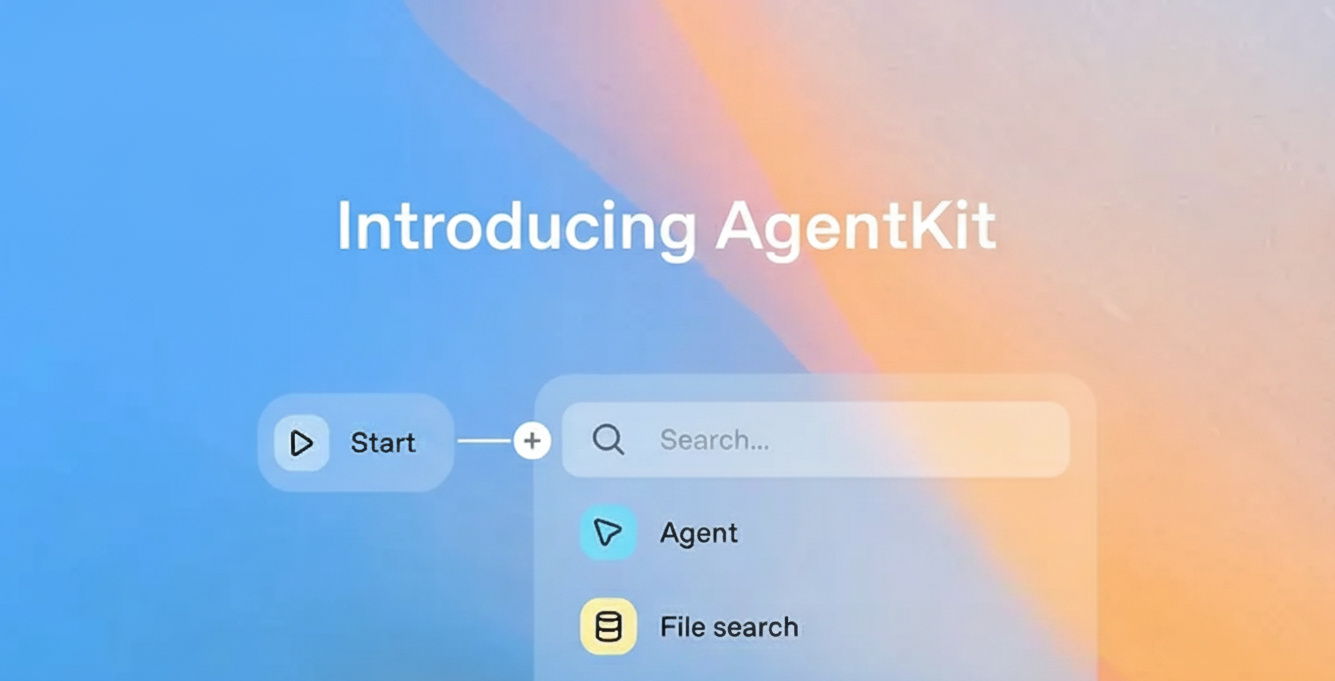
In the rapidly evolving landscape of artificial intelligence, building robust autonomous agents has often demanded stitching together multiple tools, custom code, and orchestration frameworks. Today, OpenAI introduces AgentKit, a comprehensive platform that unifies agent building, deployment, evaluation, and interface embedding into a single toolkit. With AgentKit, teams can go from prototype to production faster, more reliably, and with clearer oversight over agent behavior.
In this article, we will explore AgentKit, its core components, its design philosophy, practical usage, benefits and limitations, and how it fits into the broader agent-building ecosystem. We’ll also cover best practices, example workflows, and how to get started.
What Is AgentKit?
AgentKit is OpenAI’s integrated toolkit for building, deploying, and optimizing AI agents. It includes visual workflow design, chat embedding tools, built-in evaluation, connector management, and guardrail enforcement — all aimed at reducing friction in agent development.
Until now, building agents typically involved cobbling together orchestration logic, prompt tuning, connectors to external systems, evaluation pipelines, and frontend chat UI — often without versioning or clear visibility into agent decision flows. AgentKit brings these pieces under one roof, making agent development more consistent, safer, and scalable.
Core Components of AgentKit
AgentKit comprises four primary building blocks:
- Agent Builder
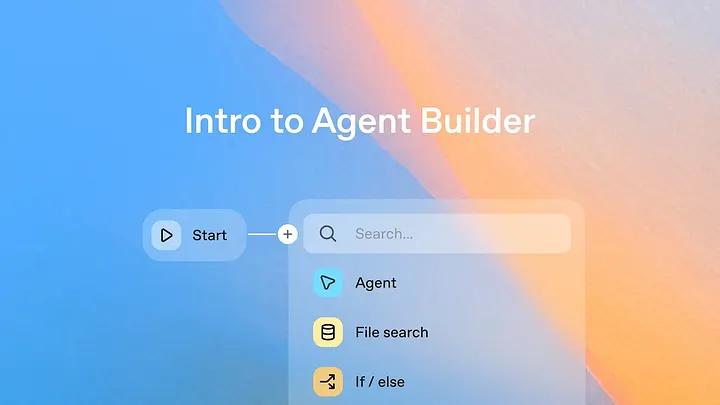
A visual, drag-and-drop canvas for composing multi-agent workflows, connecting nodes, configuring logic, and versioning workflows. It supports preview runs and inline evaluation setup. - ChatKit
A toolkit to embed agentic chat experiences in applications, abstracting away the need to build full chat UI stacks from scratch. - Connector Registry
A central hub to manage integrations to internal systems and external tools, with admin control over which connectors agents may use. - Evals & Optimization Tools
AgentKit extends OpenAI’s evaluation capabilities to agent workflows — enabling trace grading, performance datasets, automated prompt optimization, and support for third-party models.
In sum, AgentKit functions as a unified agent lifecycle platform — from design, through embedding and monitoring, to evaluation and iteration.
Design Philosophy & Underlying Technology
Built on Responses API & Agents SDK
AgentKit builds on top of the Responses API and OpenAI’s Agents SDK, which provide primitives for orchestration, tool calls, memory management, handoffs, and guardrails. The Agents SDK (Python or JS) provides basic building blocks such as agents, tool invocation, guardrails, handoffs, and evaluation tracing.
AgentKit layers higher-level abstractions: a visual canvas, embedding UI, connector management, and built-in analytics, making it easier to operationalize agent workflows.
Node-Based Graph Structure
At its core, AgentKit represents workflows via directed acyclic graphs (DAGs). Each node corresponds to a prompt or subtask; edges define dependencies or handoffs. During execution, nodes are evaluated in dependency order. This structure allows modular, transparent reasoning paths rather than opaque monolithic prompts.
The modular node architecture encourages decomposition of tasks, reusability of subtasks, and interpretability of agent reasoning chains — a critical step toward safe, auditable agent design.
Guardrails & Safety
One of the pain points in autonomous agent systems is ensuring safety, compliance, and predictable behavior. AgentKit includes guardrail support — validation logic that checks inputs and outputs, enforces business rules, or prompts for human approval when required. In Agent Builder, guardrails can be visually configured alongside logic nodes, embedding safety policies directly into workflows.
Versioning, Preview Runs, and Traceability
AgentKit supports version control of workflows, allowing rollbacks, comparisons, and evolution over time. Preview runs let developers test agent flows before full deployment. Execution traces — logs of node-level input/output and decision paths — enable inspection and debugging. These features bring software engineering rigor to agent development.
Evaluation & Optimization
AgentKit enhances evaluation support by enabling trace grading (evaluating each step in the workflow) and automated prompt optimization (tuning prompt templates based on empirical performance). It also allows evaluation of agents using external models — not just OpenAI’s. This empowers data-driven iteration and selection of the best agent logic.
Connector Ecosystem & Tool Integration
Managing integrations with external systems (databases, APIs, internal tools) has often been a complex, ad hoc task. The Connector Registry centralizes and standardizes connectors, with admin oversight. Agents invoke connectors transparently, going from reasoning to action seamlessly.
Use Cases & Success Stories
AgentKit is applicable in many domains — customer support, operations automation, research assistants, sales agents, and more. Here are some early reported use cases:
- Ramp: Using Agent Builder, the Ramp team reportedly built a procurement agent in a few hours, instead of months of custom orchestration.
- LY Corporation: In Japan, a work-assistant agent was built in under two hours, combining human experts and engineers collaboratively in the visual interface.
- Klarna & Clay: Some organizations earlier built agentic workflows using the Responses API and Agents SDK; AgentKit accelerates their time to production.
More broadly, industries like e-commerce, enterprise SaaS, helpdesk automation, internal tooling, and research assistants can all leverage AgentKit to embed agents in workflows.
How to Build an Agent with AgentKit — Step by Step
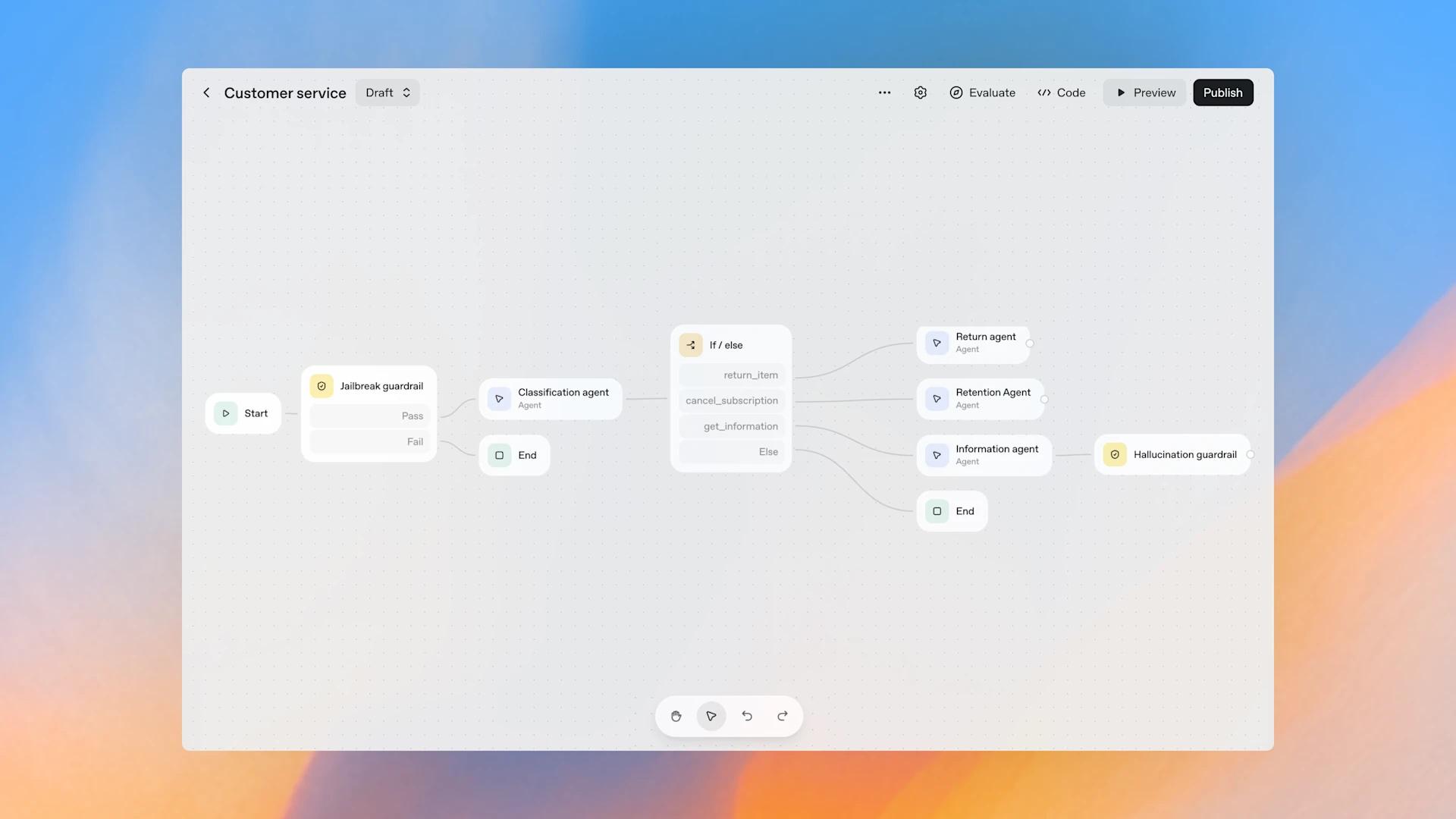
Below is a conceptual workflow combining AgentKit and the underlying Agents SDK. (Exact APIs, UI steps, or CLI commands may evolve.)
- Define the Goal & Scope
Decide what task the agent should accomplish (e.g. triage support tickets, generate research summaries, schedule meetings). List necessary tools, APIs, data sources, and constraints. - Set Up Environment & SDK
Use the OpenAI Agents SDK (Python or JS), initialize a project, install dependencies, configure your OpenAI API key. - Open Agent Builder
Launch the AgentKit visual canvas. Start with a blank canvas or use a template relevant to your domain. - Add Nodes & Connectors
Drag logic nodes (subtasks, prompts, conditionals) and link them. Bind tools or connector actions to nodes. Add guardrails for safety and approval gates. - Configure Preview Runs & Versions
Run the workflow in preview mode to test logic without committing. Save versions as you refine. - Embed Chat Interface (ChatKit)
Use ChatKit to integrate the agent’s conversational interface into your web or mobile app. You connect the logic workflow behind the scenes. - Evaluate & Optimize
Use trace grading to evaluate each node’s output, set performance metrics, tweak prompts, and iterate. Optionally run evaluations against alternate models. - Deploy & Monitor
Once validated, deploy the agent into production. Monitor usage, log traces, refine logic, update connectors and versions as needed. - Iterate
Use evaluation data, user feedback, and new business requirements to refine or extend your agent workflows.
Example Sketch: Support Ticket Agent
- Triage node: Classify ticket type (billing, technical, account)
- Route node: Based on classification, route to a specialist agent
- Action node: Use connector to fetch user data or prior tickets
- Generate response node: Produce a draft answer
- Approval node: If high-risk content, ask a human to approve
- Send node: Use connector to send the message via the system
Each node can be inspected, traced, and graded. Guardrails can block responses that leak PII or violate policy.
Put these ideas to work.
From a specific fix to a complete website, we can help you define the scope and get it done.
Discuss my websiteCustom Web & Application DevelopmentShare your goals. We typically reply within 4 hours with questions and practical next steps.
Benefits of Using AgentKit
Faster Time to Production
By consolidating design, UI embedding, connectors, versioning, and evaluation into one framework, AgentKit dramatically reduces iteration cycles. According to OpenAI, teams that used AgentKit cut iteration time by ~70%.
Transparent Agent Logic & Auditing
Node-based workflows and trace logging make agent reasoning interpretable and auditable — a key requirement in regulated industries.
Safe, Policy-Aware Agents
Guardrails embedded into workflows reduce the risk of unexpected or malicious outputs, giving engineers and compliance teams confidence.
Reusable & Modular Workflows
Nodes and subgraphs can be reused across agents. You can compose new agents from existing building blocks rather than starting from scratch.
Embedded UX Out of the Box
With ChatKit, product teams no longer need to invest heavily in chat interface plumbing — agents can be embedded quickly and consistently.
Evaluation Built In
Performance measurement and prompt tuning are first-class components — you can optimize agents empirically rather than heuristically.
Centralized Connector Management
Administrators can control which data sources or APIs agents may use, ensuring governance and security.
Challenges, Risks & Considerations
While AgentKit promises great productivity gains, there are still several challenges and caveats to consider:
Black-Box Models Remain
Even with node decomposition, each prompt still uses large language models that can behave unpredictably. Guardrails help, but cannot guarantee correctness.
Complexity of Workflows
For highly complex agent systems (many agents, loops, conditional behavior), visual canvases can become cluttered and harder to manage.
Cost & Token Usage
Frequent node invocations and evaluation overhead may drive up token usage and operational cost. Optimizing for efficiency is important.
Versioning & Dependency Management
As agents evolve, managing dependencies, backward compatibility, and connector versions can introduce friction.
Security & Privacy
Agents connected to sensitive systems must be carefully designed with least privilege and rigorous guarding. Connector Registry helps, but integration security still matters.
Feature Maturity & Beta Access
As of its announcement on October 6, 2025, AgentKit is in early stages (beta). Some features, pricing, region availability, or scalability limits may evolve.
Learning Curve for Logic Design
Non-technical users may need to understand how to decompose tasks, define guardrails, and reason over graph logic. It’s not a turnkey “magic agent” button.
Best Practices for AgentKit Workflows
To make your agent development with AgentKit more robust and maintainable, consider these practices:
- Modularize Subtasks
Break down complex tasks into small, reusable nodes. Don’t overload a single node with many responsibilities. - Label & Document Nodes
Give nodes clear names and documentation to aid readability, audits, and debugging. - Use Guardrails Liberally
For any node output that interfaces with sensitive systems, validate output formats, length, or content. Use approval nodes where appropriate. - Limit Depth & Loops
Avoid unbounded loops or deeply nested logic that’s hard to trace. Use explicit iteration limits or fallback behavior. - Test with Realistic Inputs
Use representative inputs in preview runs and evaluate how nodes behave under edge cases. - Automate Evaluation & Alerts
Establish performance thresholds; trigger alerts if behavior degrades. Use trace grading to monitor drift or errors. - Version Frequently
Use versioning as a safety net; don’t deploy experimental logic to production without backup. - Monitor Usage & Cost
Track node execution counts, token consumption, and optimize redundant steps over time. - Isolate Connectors
Restrict connectors to minimal APIs and limit privileges. Use sandbox or read-only access when possible. - Iterate Based on Real Feedback
Use logs, user feedback, and evaluation data to refine prompt templates, branch logic, and overall flow.
How AgentKit Fits Among Other Agent Tools
AgentKit enters a growing landscape of agent orchestration and AI automation platforms (e.g. LangChain, AutoGen, custom orchestrators). Its key differentiators:
- Integrated visual UI + evaluation + embedding in one product, rather than stitching separate systems
- Connector registry with governance, giving control to admins
- Trace grading and prompt optimization built in
- Native integration with Responses API and OpenAI agent stack
However, existing frameworks like LangChain remain powerful for highly custom or experimental architectures. Some teams may still prefer full-code flexibility over a visual canvas for exotic workflows.
AgentKit can complement existing systems: you might build core logic in code and wrap portions in AgentKit for monitoring, UI integration, or evaluation.
FAQs
1: What is AgentKit?
AgentKit is OpenAI’s unified toolkit for building, deploying, and optimizing AI agents. It includes visual workflow design, chat embedding (ChatKit), evaluation tools, and connector management.
2: How does AgentKit relate to OpenAI’s Agents SDK and Responses API?
AgentKit builds on top of the Agents SDK (Python/JS) and the Responses API, leveraging their orchestration primitives, and adds higher-level functionality like visual interfaces, evaluation, and embedding.
3: Can I embed agents built with AgentKit into my app?
Yes — ChatKit provides embeddable chat interfaces that integrate seamlessly with AgentKit logic workflows.
4: How do I ensure safety and compliance in agent outputs?
Use guardrails and approval nodes in Agent Builder to validate and control node outputs. Evaluate behavior with trace grading and versioning.
5: Is AgentKit available now or in beta?
AgentKit was announced on October 6, 2025, and is currently available in beta. General availability and pricing details are still evolving.
Summary
AgentKit represents a significant leap forward in how developers and teams build autonomous agents. By combining visual workflow design, chat embedding, evaluation tools, connector governance, and safety guardrails into a unified platform, AgentKit lowers friction and introduces software engineering discipline into agent development. While not without challenges — including cost, complexity, and evolving maturity — it holds the promise of making agentic applications far more accessible, auditable, and reliable.
If you're building or exploring AI agents today, AgentKit is a toolkit worth evaluating as your central framework for design, testing, embedding, and iteration.