A WooCommerce store processes customer identities, orders, addresses, account credentials, business records, and payment handoffs. A security failure can interrupt revenue and damage customer trust at the same time. Strong protection requires a repeatable operating system: reduce exposure, verify every integration, monitor important changes, and rehearse recovery.
Map the checkout data flow
Document what information enters the store, where it travels, which systems receive it, and how long it remains available. Confirm that payment details move directly to a reputable, PCI-compliant provider through an approved integration. Validate the extension publisher, update history, support status, requested permissions, and configuration.
Remove unnecessary checkout fields and old exports. Restrict staff access to order details by job need, and review integrations that copy orders into accounting, fulfilment, email, analytics, or support platforms. Less retained information means less information to expose.
Protect administrator and customer accounts
Require unique passwords and multi-factor authentication for administrators, store managers, developers, hosting accounts, domain registrars, and payment dashboards. Avoid shared accounts, grant the lowest necessary role, review privileges regularly, and remove access immediately when work ends.
Use our WordPress two-factor authentication guide to strengthen privileged accounts and reduce the impact of stolen passwords.
Rate-limit repeated customer login failures, make password-reset responses non-revealing, invalidate sessions after sensitive changes, and watch for bursts of logins from unusual locations. Risk-based checks are usually better than challenging every buyer.
Control extensions, themes, and custom code
Maintain an inventory containing owner, purpose, version, renewal status, and last review date. Remove abandoned or duplicate extensions instead of merely deactivating them. Test updates on a protected staging copy and verify cart, coupons, tax, shipping, emails, accounts, refunds, subscriptions, and gateway callbacks before deployment.
A professional WordPress security audit can reveal vulnerable components, unsafe settings, hidden users, and gaps that automated plugin reports miss.
Keep custom code in version control, require review, validate input, escape output, use nonces and capability checks, and never place production secrets in source files or browser-delivered code.
Harden hosting and application settings
Use supported PHP and database versions, HTTPS everywhere, secure cookies, a web application firewall, restricted file editing, least-privilege database credentials, and correct file permissions. Prevent public access to logs, backups, configuration files, and database exports.
Follow the practical steps in our WordPress file permissions guide to limit where the application and server users can write.
Put these ideas to work.
From a specific fix to a complete website, we can help you define the scope and get it done.
Discuss my websiteAdvanced WordPress Security SolutionsShare your goals. We typically reply within 4 hours with questions and practical next steps.
Detect checkout tampering
Some attackers quietly inject scripts, replace payment destinations, alter bank details, create administrator accounts, or redirect selected visitors. Monitor checkout templates, JavaScript, active plugins, payment settings, webhooks, privileged users, and scheduled tasks. Investigate unexplained outbound connections.
Test the buying journey externally after meaningful changes. Confirm the domain, certificate, checkout fields, payment destination, confirmation page, order record, customer email, inventory update, refund path, and webhook status. Synthetic transactions reveal failures that uptime checks miss.
Build backups around orders
A nightly backup may be inadequate for a busy store because restoring it could erase a day of orders. Match recovery objectives to transaction volume, keep copies outside the hosting account, encrypt them, restrict deletion, and test restores in isolation.
Use our WordPress backup and recovery guide to define frequency, retention, off-site storage, and restore testing.
Prepare a store-specific incident plan
Record who can disable checkout, contact the payment provider, preserve logs, restore a clean version, notify customers, and approve reopening. Rotate hosting, WordPress, database, SFTP, email, registrar, CDN, API, and gateway credentials as appropriate. Review webhooks and payout information, not only WordPress files.
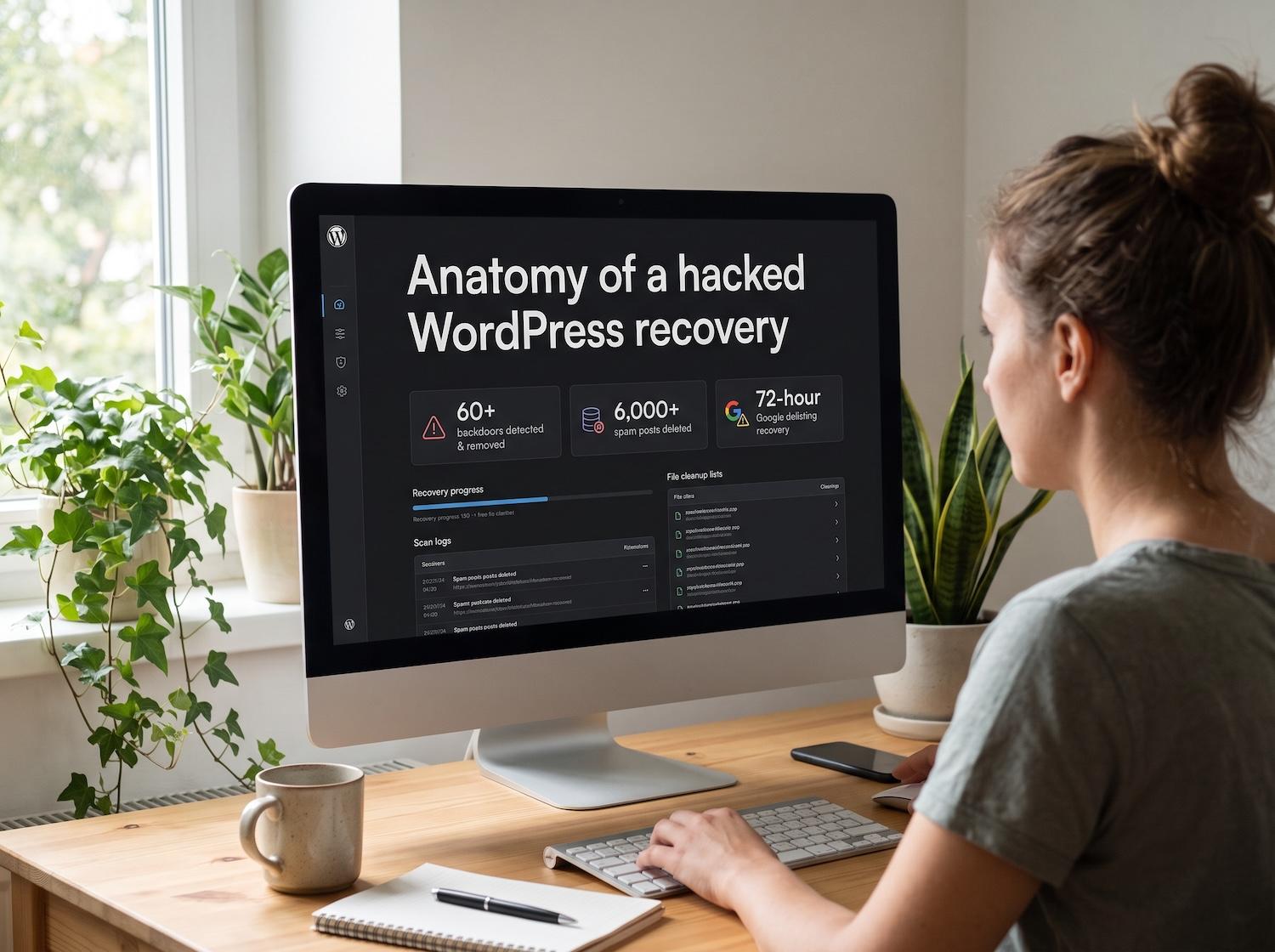
If compromise is suspected, our hacked WordPress recovery service can investigate the entry point, clean the store, and harden it against recurrence.
For preventative hardening and ongoing protection, see our WordPress security service.
A practical weekly routine
Review privileged users and payment settings, inspect critical alerts, confirm backups, apply tested updates, remove unused integrations, run one external checkout test, and record exceptions with an owner and due date. Consistency prevents small weaknesses from becoming emergency work.
Frequently Asked Questions
Is WooCommerce secure by default?
WooCommerce provides a sound foundation, but store security also depends on hosting, configuration, extensions, administrator access, payment architecture, backups, monitoring, and maintenance.
Does my WooCommerce site store card details?
A correctly configured store normally sends sensitive payment details directly to a PCI-compliant payment provider. Verify the exact data flow and avoid storing card data on WordPress.
How often should a WooCommerce store be backed up?
Backups should match transaction volume. Busy stores may need near-real-time order and database backups plus regular full-site backups stored outside the hosting account.
What should I do first if my store is hacked?
Preserve evidence, restrict access, control checkout, rotate credentials, identify the entry point, remove malicious changes, verify payment settings, and notify affected parties when required.