A web application firewall can block exploit patterns, abusive bots, credential attacks, and unwanted traffic before requests reach WordPress. It is most effective as one layer in a broader program—not as permission to postpone updates, keep unnecessary plugins, or ignore compromised accounts.
Understand where the firewall runs
An edge or cloud WAF filters traffic before the origin server, which can reduce malicious load and hide the origin. A host-level firewall sits near the web server. A WordPress plugin firewall may see useful application context but often runs after more server resources have been consumed. Some sites combine layers with clearly divided responsibilities.
Define what the site needs protected
Inventory login routes, XML-RPC, REST endpoints, forms, search, uploads, checkout, account pages, administrative paths, and custom applications. Identify normal traffic patterns, trusted integrations, geographic requirements, payload sizes, and peak request rates before enabling aggressive rules.
A WordPress security audit provides the endpoint and component inventory needed for useful WAF policy.
Use managed rules as a baseline
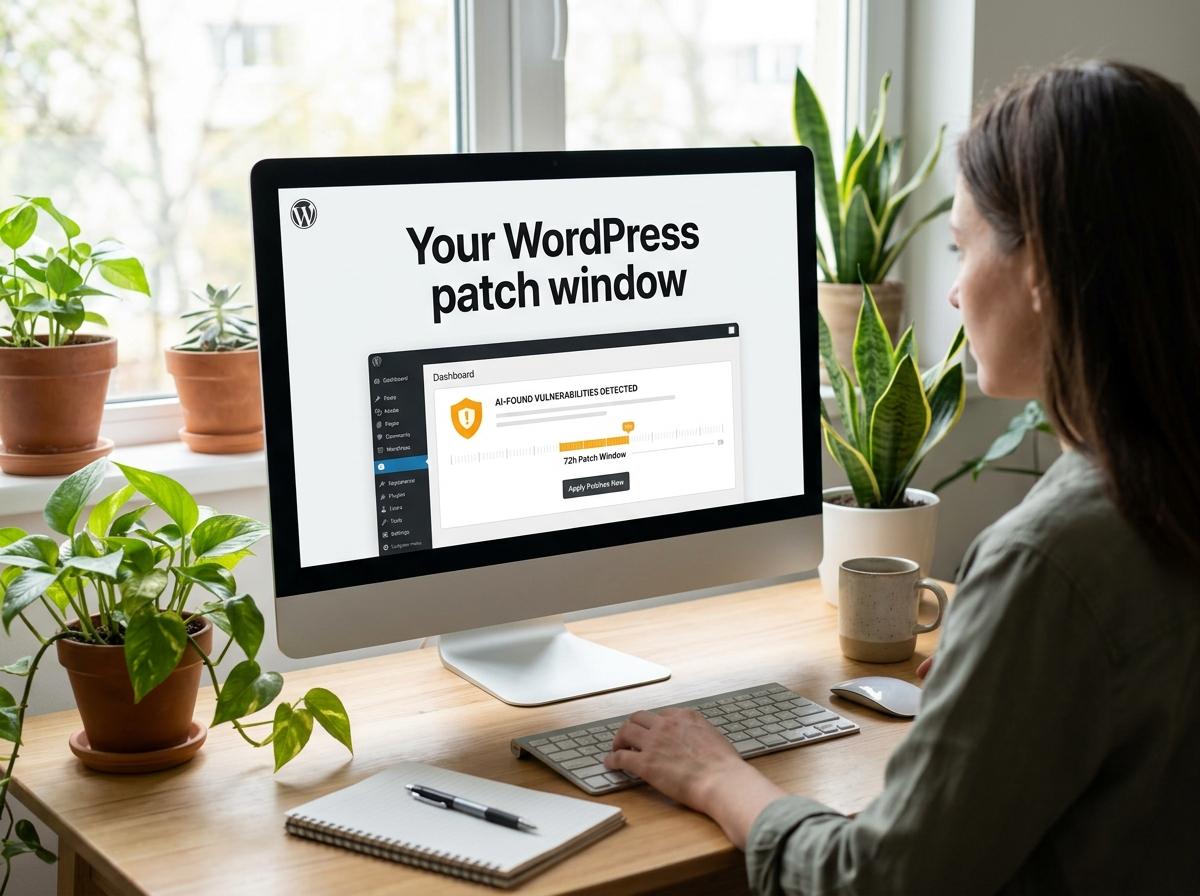
Managed rule sets can cover common injection, traversal, malicious file, scanner, and exploit patterns. Enable them in a monitored mode first when possible, review matches, then enforce progressively. Understand update frequency and whether the provider offers virtual patches for newly disclosed WordPress vulnerabilities.
Our WordPress security service can configure layered filtering and validate it against the site’s real workflows.
Protect authentication separately
Apply rate limits, bot signals, challenges, and stricter policies to administrative and authentication routes. Avoid blocking legitimate teams behind shared networks, accessibility tools, payment callbacks, or mobile connections. WAF controls should complement unique credentials and multi-factor authentication.
Follow our WordPress two-factor authentication guide because filtering cannot prevent every stolen-session or credential attack.
Tune rate limits by endpoint
A search request, checkout callback, login attempt, static image, and API export have different costs and normal rates. Configure limits accordingly. Use short and long windows to detect bursts and sustained abuse, and define safe exceptions with owners and expiry dates.
Put these ideas to work.
From a specific fix to a complete website, we can help you define the scope and get it done.
Discuss my websiteCustom WordPress Web DevelopmentShare your goals. We typically reply within 4 hours with questions and practical next steps.
Prevent origin bypass
If the WAF is at the edge, restrict direct access to the origin where hosting allows it. Protect origin addresses, validate forwarded client-IP headers, secure DNS and provider accounts, and test that requests cannot simply avoid the filtering layer.
Add browser-facing protections from our WordPress security headers guide while testing each policy to prevent functional breakage.
Measure false positives
Test login, editing, media uploads, forms, search, checkout, refunds, webhooks, APIs, scheduled jobs, and accessibility flows. Record the rule, endpoint, user impact, and approved exception. Do not disable an entire rule family when a narrowly scoped exclusion will solve the problem.
Send logs outside WordPress
Capture rule ID, action, request path, response, source context, timing, and correlation identifiers without storing unnecessary passwords or payment data. Alert on sudden block increases, repeated administrative probes, virtual-patch matches, disabled policies, and configuration changes.
Ongoing WordPress maintenance ensures WAF exceptions and managed rules remain aligned with site changes.
Know what a WAF cannot do
A firewall cannot remove an existing backdoor, fix excessive privileges, repair unsafe business logic, validate every custom authorization decision, or guarantee clean backups. Continue patching, code review, least privilege, monitoring, recovery tests, and incident planning.
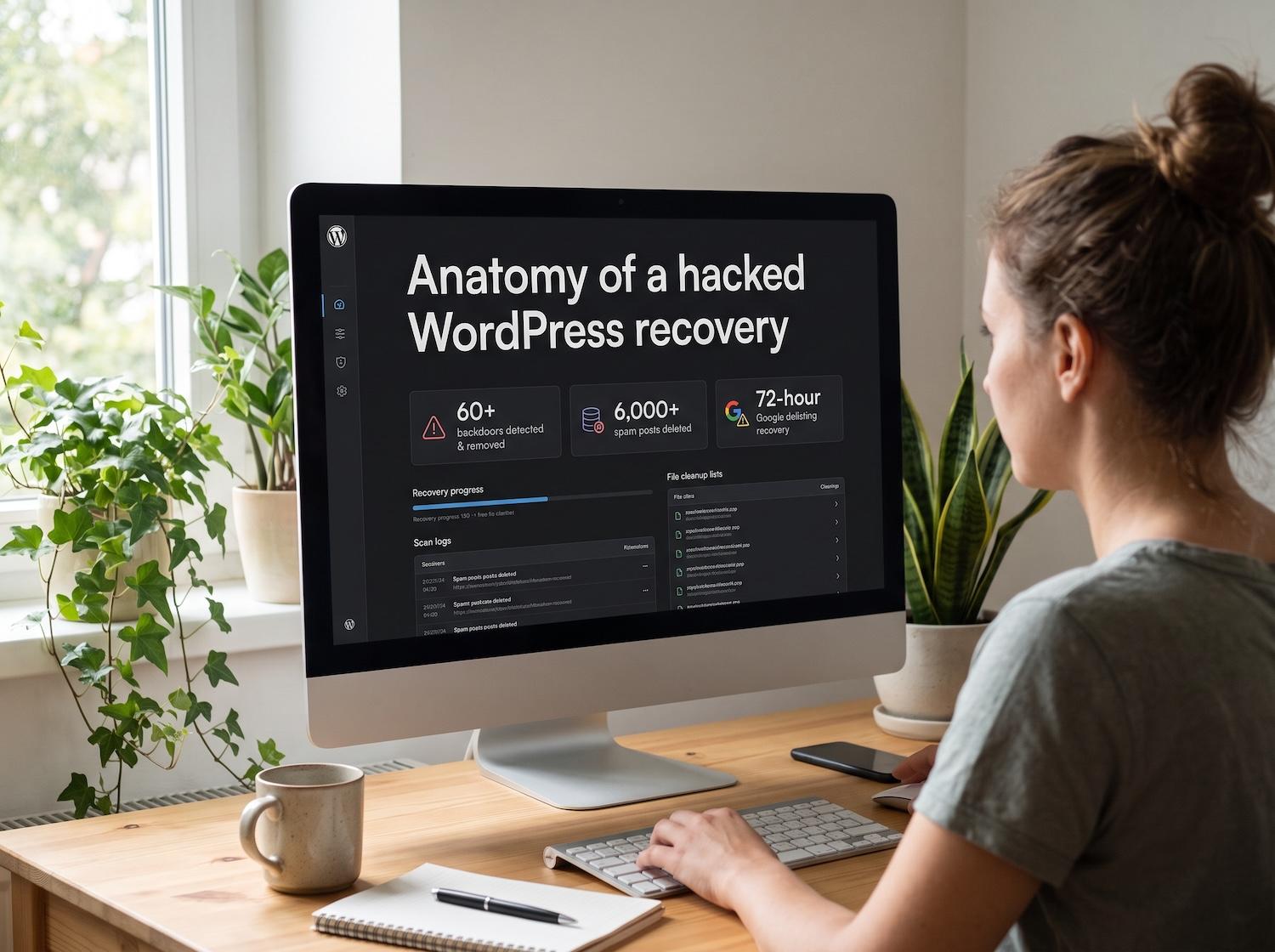
If alerts indicate successful exploitation, our hacked WordPress recovery service can determine scope, remove persistence, and close the underlying weakness.
Frequently Asked Questions
What is a WordPress web application firewall?
A WAF analyzes web requests and applies rules that allow, challenge, rate-limit, or block traffic before vulnerable requests reach WordPress.
Is a WAF plugin the same as a cloud WAF?
No. A plugin usually evaluates traffic after it reaches the server and loads part of WordPress. A cloud or edge WAF can reject traffic earlier and protect origin resources.
Can a WAF replace WordPress updates?
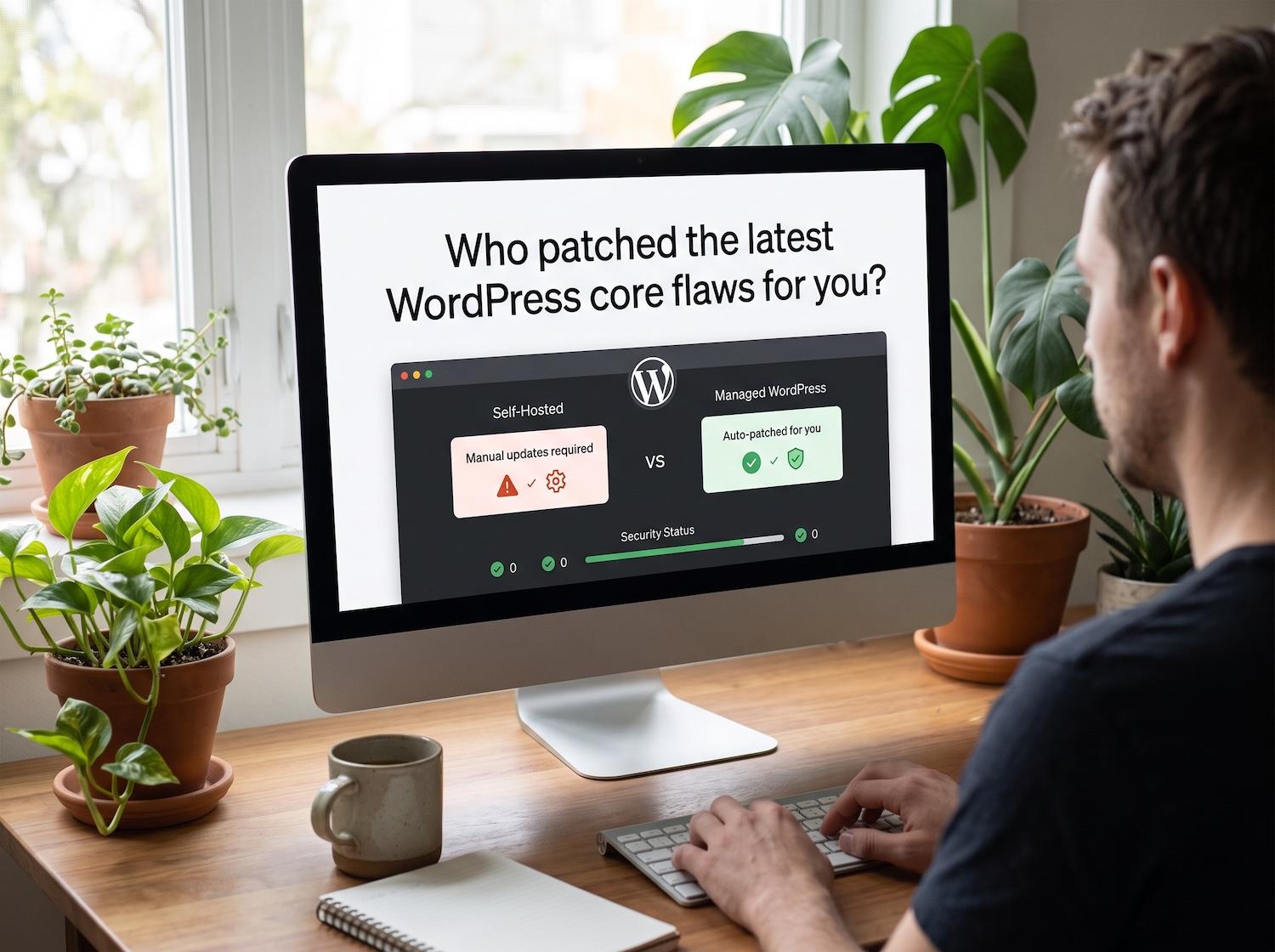
No. Virtual patches reduce exposure temporarily, but vulnerable core, plugins, themes, credentials, and configuration still need correction.
Will a WAF slow down my website?
A well-configured edge WAF can reduce abusive load and may improve delivery through caching. Poor rules or application-level processing can add latency, so performance and false positives must be measured.