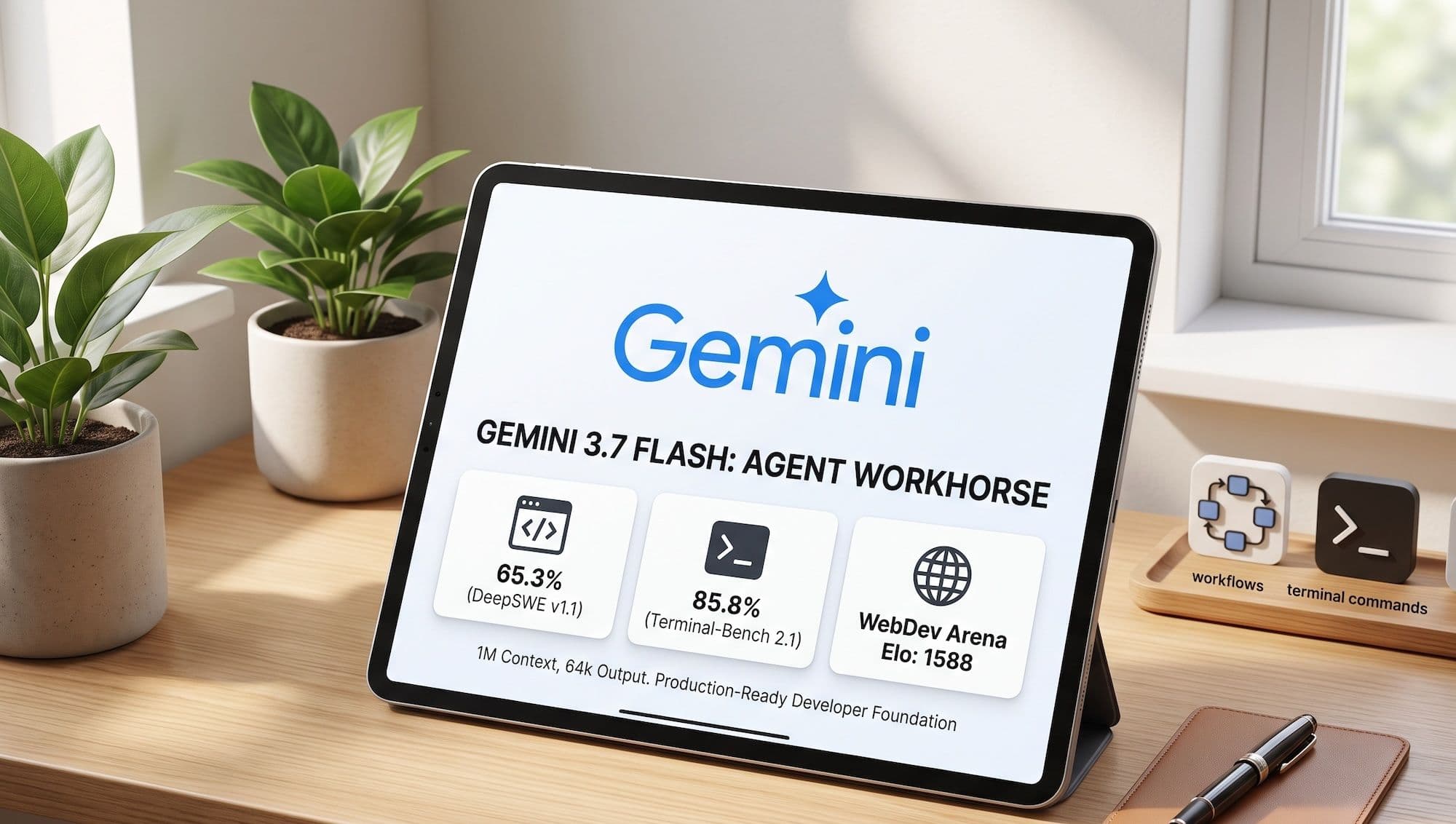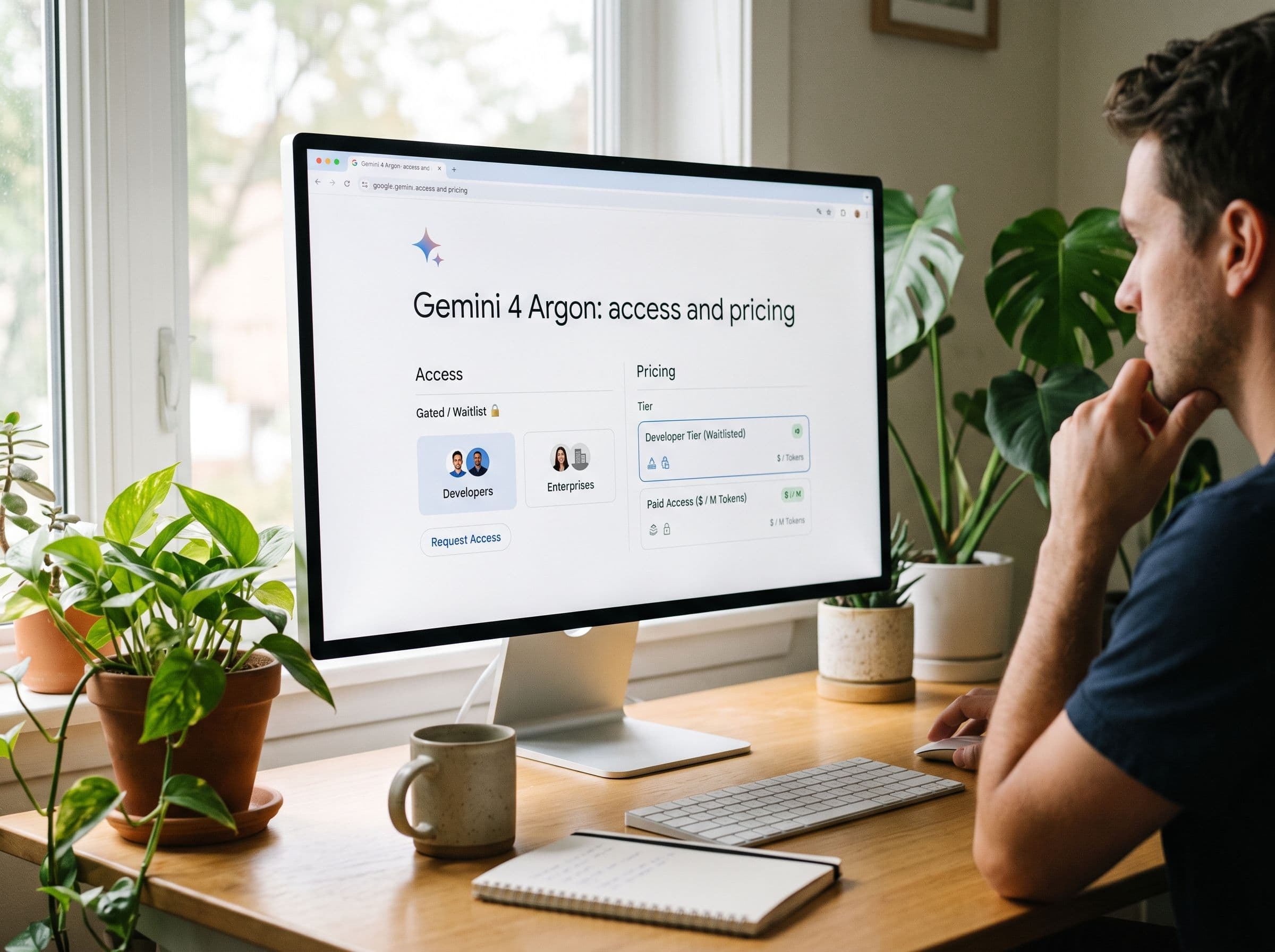
Gemini 4 Argon is Google's newest frontier model, announced on September 30, 2026, and it is not available to the public. Google is rolling it out first to trusted cyber defenders in its Fairwind Program, so most businesses cannot use it yet. Here is what is confirmed, what is still unclear and what to do now.
What Google says Argon is
Google presents Argon as a model for long, complex work: real-world software engineering, enterprise knowledge work such as legal and finance, and cyber defense. Its headline spec is a 1M-token output limit, which Google calls industry-leading and which press coverage compares with a 64K ceiling on earlier Gemini releases.
Google also says Argon can autonomously find, validate and patch critical software vulnerabilities, and that its own staff already use it for debugging and codebase migrations.
Who can use it today
As of October 6, only select cyber partners in the Fairwind Program have access. Google has said broader availability will follow, but the sources we checked give no date. Check Google's Gemini model documentation before you plan around it.
What it costs
Reports conflict, so do not budget from any single figure. Vals lists Argon at $4 per million input tokens and $20 per million output tokens with a 1M-token context window. Other write-ups quote different numbers, and we found no public API price page from Google.
One more mismatch to know about: Google advertises a 1M-token output limit, while Vals ran its evaluations with a 262K maximum output. Treat 1M as Google's claim until the model documentation confirms it.
What the independent numbers show
On the Vals Index, Argon ranked first at 68.90%, at $15.68 per test. Claude Sonnet 5.5 scored 67.04% and Claude Opus 5.5 scored 66.97%, so the lead is small.
Argon does not lead everywhere. Vals puts it 5th of 43 on Terminal-Bench 4.0 (57.58%) and 7th of 8 on CUA-bench (4.83%). Its cost per test also climbs on long agentic tasks: $193.78 on CUA-bench and $57.82 on Code Migration. Google's own benchmark claims cite Vals, so read them as vendor claims.
What it means for a WordPress or Next.js site
Nothing changes on your site today. Two areas are worth watching:
- Long migrations and refactors, where a very large output limit could matter once you can use it.
- Security. If models like this find flaws faster, the time between a public advisory and exploitation may shrink. We cover what to change in AI-found vulnerabilities and your WordPress patch window.
Put these ideas to work.
From a specific fix to a complete website, we can help you define the scope and get it done.
Discuss my websiteCustom Web & Application DevelopmentShare your goals. We usually reply within one business day with questions and practical next steps.
What to do while Argon is gated
- Decide which job you would give it: migration planning, long document work or code review.
- Build a test set of 10 to 20 real tasks from that job, with client data removed.
- Write down how you will score the results, including cost per completed task, not just price per token.
- Keep the model name in one config value so a switch later is a small change.
- Check the vendor's data terms before sending any client code or content to a new model.
- Re-read Google's model page on the day access opens, and compare Argon with the cheaper models you already use. Our model comparison lists their prices.
We have not used Argon. This post is based on Google's announcement, press coverage and Vals' published evaluation.
Frequently asked questions
Is Gemini 4 Argon available in the Gemini app or API?
Not publicly. Google is rolling it out to Fairwind Program partners first, and the sources we checked give no wider release date.
Is Argon better than Claude Opus 5.5 or GPT-6 Astra?
On the Vals Index it ranks first, but only about two points ahead of Sonnet 5.5 and Opus 5.5, and it ranks lower on some agentic tests. Google's own comparisons are vendor claims.
Should I move my chatbot to Argon when it opens?
No, not automatically. Test it on your own questions first and compare cost per answered question against the model you use now.
Need help evaluating a model for your site?
We help teams test models on real tasks and wire the winner into WordPress or Next.js with spend limits and fallbacks. See our AI integration services.