“Shopify or custom?” gets asked like it's a taste preference — like choosing a font. It isn't. It's a real financial decision with numbers behind it, and most comparisons skip straight to opinions about flexibility and skip the actual math. Here's the math: a solid Shopify store runs $30 to a few hundred dollars a month for most small-to-mid businesses. A custom Next.js storefront realistically costs $20,000 to $50,000+ to build, plus hosting and maintenance after that. Neither number tells you which one is right for your business — that depends on what you're actually optimizing for. This guide breaks down both, honestly, with real 2026 figures.
The quick answer: cost by approach
What Shopify actually costs
Shopify's pricing looks simple until you add up all three layers: the subscription, the transaction fees, and the apps.
Use Shopify Payments and that third-party surcharge disappears entirely — it's the single easiest way to cut Shopify's real cost, and most stores never take advantage of it. Beyond the plan itself, budget for a premium theme ($100–$500 one-time, or $500–$5,000+ for custom theme development), and apps: most stores run 5 to 15 of them, typically $50 to $300 a month combined, more for mid-market brands running a heavier app stack.
Put together, a small store doing about $5,000 a month in revenue typically pays around $240 a month all-in — roughly 4.8% of revenue. A growing store at $25,000 a month typically pays closer to $940 a month, or about 3.8% of revenue. That percentage tends to shrink as revenue grows, which is exactly why Shopify remains hard to beat on pure cost efficiency for most small and mid-size stores.
What a custom Next.js storefront actually costs
This is where the picture gets more complicated, because “custom Next.js store” can mean two very different projects.
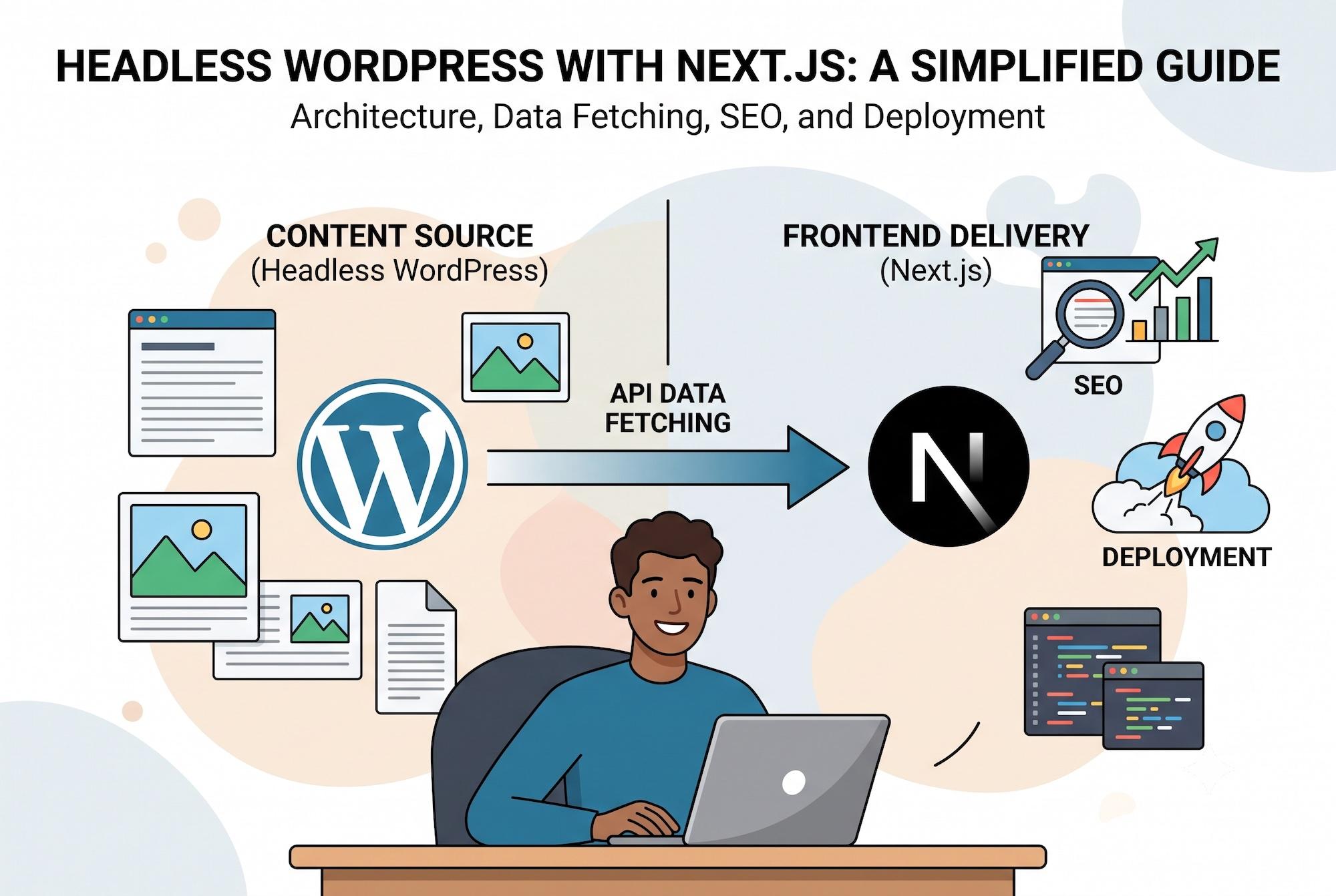
Headless Shopify (Next.js frontend, Shopify backend). You keep Shopify's product catalog, checkout, inventory, and admin — you just replace the customer-facing storefront with a custom Next.js build for better speed and design control. A realistic scenario: roughly $6,000 for design, $22,000 for development, plus around $1,200 a year in hosting and the Shopify plan itself on top. That's close to $30,000 in year one, with $4,200 to $7,000 a year afterward for ongoing maintenance.
Fully custom, backend included. You skip Shopify entirely and build on an open-source commerce engine like Medusa or Saleor, or wire Next.js directly to Stripe. Licensing is free, but you're now responsible for infrastructure that Shopify used to handle for you — inventory logic, admin tooling, PCI compliance, uptime. Realistic project costs land in the $25,000 to $50,000+ range for a proper build, plus hosting that can run anywhere from $20 a month for a small self-hosted setup to several hundred for managed infrastructure at scale.
One rule of thumb worth remembering: going headless typically costs 1.5 to 2.5 times what an equivalent themed build costs, and adds 8 to 16 weeks to your timeline. That premium buys you full control over Core Web Vitals, page structure, and every pixel of the experience — it doesn't buy you a cheaper store.
Why the speed difference actually matters financially
This isn't just a developer preference. Page speed has a direct, measurable line to revenue: research from Google has found that a 0.1-second improvement in load time can increase conversion rates by roughly 8% on ecommerce sites. A well-built Next.js storefront routinely scores 90 or higher on Google PageSpeed without extra optimization work, while a heavily app-loaded Shopify theme can struggle to hit that same number without real effort. For a store already doing meaningful volume, that conversion gap can be worth more than the entire cost difference between the two approaches — which is exactly why larger brands are often the ones that justify the headless investment.
When Shopify is the right call
- You're launching a new store and need to validate demand quickly
- You don't have in-house developers to maintain custom infrastructure
- Your catalog and checkout needs fit within what apps and themes already offer
- Your monthly revenue is under roughly $2M and operational complexity is manageable
When a custom Next.js storefront is the right call
- Theme and app limitations are visibly capping your conversion rate or brand experience
- Page speed and Core Web Vitals are a measurable competitive disadvantage today
- You need a single product catalog powering web, mobile, and other channels at once
- You have the budget and timeline for an 8–16 week (or longer) build, not a launch-this-month one
Put these ideas to work.
From a specific fix to a complete website, we can help you define the scope and get it done.
Discuss my websiteCustom React & Next.js DevelopmentShare your goals. We typically reply within 4 hours with questions and practical next steps.
The middle path most comparisons skip
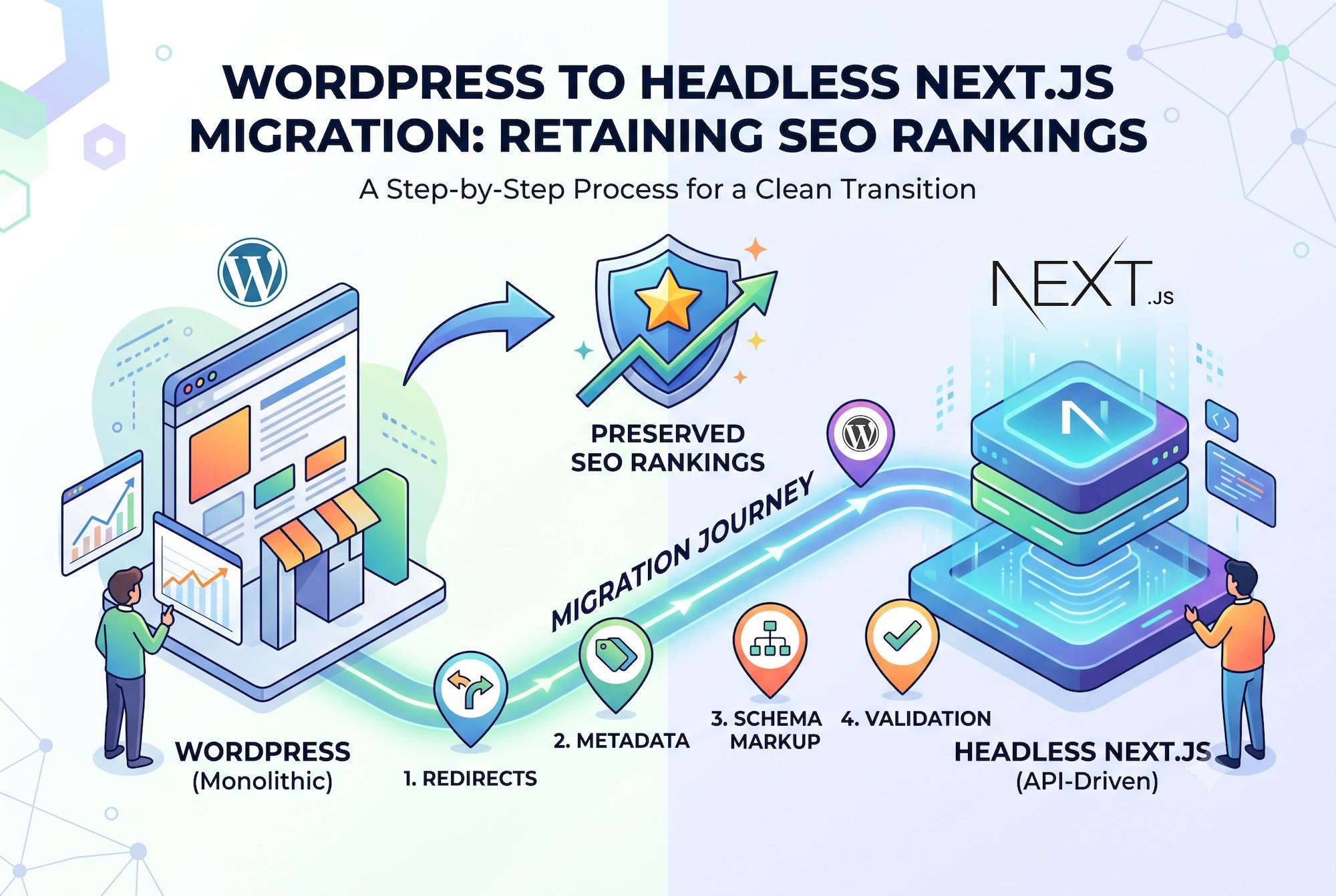
The “vs.” framing suggests you have to choose one system end to end. In practice, the most common real-world move for an established Shopify store is going headless on the frontend only: keep Shopify's Storefront API handling products, carts, and checkout, and replace just the customer-facing theme with a custom Next.js build. You keep the backend your team already knows, and you get the performance and design control a Liquid theme can't match. Vercel's own Next.js Commerce template exists specifically for this path, and it's the reason “headless Shopify” is one of the fastest-growing categories of Next.js project in 2026.
Three-year total cost of ownership, side by side
Upfront cost only tells half the story. Here's roughly what each path costs over three years for a mid-size store doing about $25,000 a month in revenue:
On paper, Shopify alone still costs less over three years for a store this size. The headless build only comes out ahead when the performance gains translate into measurably higher conversion — which is a real outcome for some stores, and an expensive assumption for others. Run your own numbers before assuming either direction.
A real example
We recently built the Bliss Emporia Shopify store for a growing retail brand — a clean example of what a properly configured, themed Shopify build looks like (that case study is still being finalized on our end). On the custom side, our ProxiesThatWork Next.js application demonstrates the kind of performance and API-handling work a fully custom build makes possible — the two projects sit at opposite ends of exactly the spectrum this guide walks through.
Frequently Asked Questions
Is Shopify or a custom Next.js storefront cheaper overall?
For most small and mid-size stores, Shopify is cheaper on both upfront cost and total cost of ownership — often 3–5% of revenue all-in. Custom Next.js only becomes cost-competitive at higher volumes, where the conversion-rate gains from better performance start to outweigh the build cost.
Can I use Next.js with Shopify instead of switching platforms entirely?
Yes — this is the most common real-world setup. You keep Shopify as the backend (products, checkout, inventory) and use Shopify's Storefront API to power a custom Next.js frontend. You get Shopify's commerce engine and Next.js's performance without a full replatform.
How long does a headless Shopify + Next.js build actually take?
A production storefront on an existing Shopify backend typically takes 10 to 16 weeks. A full composable rebuild that also replaces the backend runs 4 to 9 months, depending on catalog size and integration complexity.
Does going headless actually improve conversion rates?
It can, when the underlying reason for going headless is a genuine performance or UX limitation. Faster load times measurably improve conversion — roughly 8% for every 0.1 seconds shaved off, according to Google's own research — but headless work done poorly, with heavy client-side rendering, can end up slower than a well-optimized themed store.
At what point does a business outgrow standard Shopify?
There's no single revenue number, but the common signals are: theme and app limitations are visibly capping conversion, checkout customization needs exceed what Shopify allows on your current plan, or you need one product catalog powering multiple channels (web, mobile, kiosk) at once.
Summary
Shopify and a custom Next.js storefront solve different problems at different price points. Shopify wins on cost efficiency and speed to launch for the large majority of stores — typically 3% to 5% of revenue all-in once fees, themes, and apps are counted. A custom Next.js build costs meaningfully more upfront, generally $20,000 to $50,000 or more, and only pays for itself when performance, design control, or multi-channel needs are genuinely limiting growth on Shopify's standard theme system. For most established Shopify stores that want both, the practical answer isn't “vs.” at all — it's keeping Shopify as the backend and building the storefront in Next.js.
Reference Links
- Shopify Pricing (2026): Plans, Fees & Real Cost Breakdown — Commerce UI
- Shopify Fees 2026 — Taxomate
- How Much Does a Headless Shopify Build Cost in 2026? — Stocks Local
- How Much Does Next.js Website Development Cost in 2026? — HeyNeuron
Not sure which one fits your store?
Both paths are legitimate — the right one depends on your catalog, your traffic, and where Shopify's defaults are actually holding you back. Tell us where your store stands today and we'll give you a straight answer, not a sales pitch for whichever one we happen to build.
Get a scoped quote for a custom Next.js storefront →
Prefer to stay on Shopify and get more out of it? See our Shopify store development services, or if speed is the actual pain point, start with our website speed optimization work.