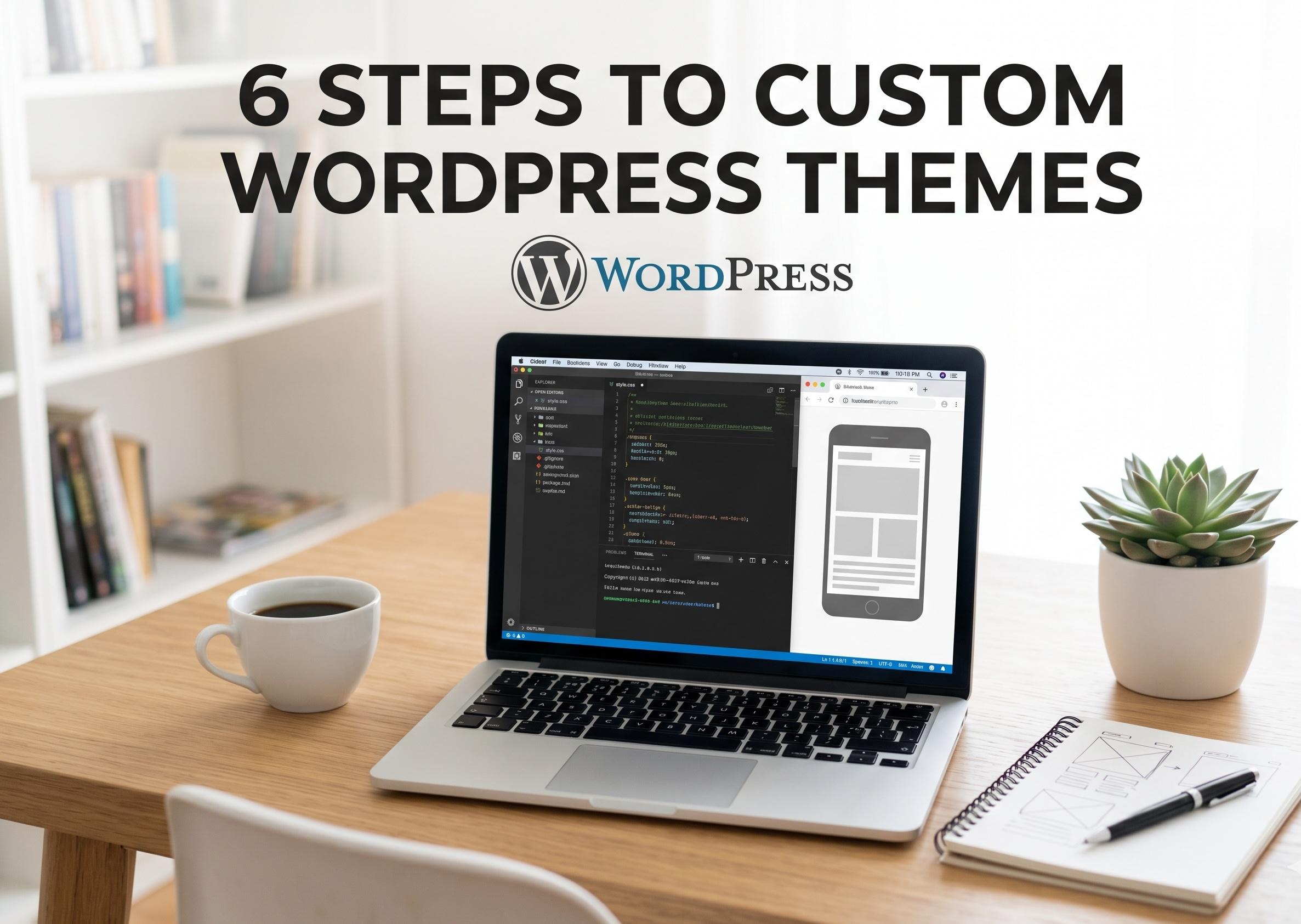
Building your own layout can be incredibly rewarding, especially if you are transitioning from static layouts or want to understand what goes on beneath the surface of the world's most popular Content Management System (CMS). While pre-made options are abundant, knowing how to create a WordPress theme gives you unparalleled creative freedom, eliminates bloated plugin dependencies, and dramatically improves site performance.
According to guidelines found in the official WordPress Theme Developer Handbook, a classic theme relies on a clean, structural synergy between semantic HTML5, CSS layout principles, and modular PHP blocks. Fortunately, constructing an optimized theme from scratch isn't exclusively for master software architects. If you understand basic front-end components, you can craft a functional design effortlessly.
In this absolute blueprint, we will unpack a thorough 6-step classic theme development guide. We will look at structural layouts, write clean, production-ready code blocks, and explore how to break a flat static interface into dynamic, modular templates.
Prerequisites and Essential Tools
Before executing this WordPress theme layout tutorial, you must configure an isolated sandbox environment. Working directly on a live production server is highly dangerous and a poor engineering workflow.
- Local Development Server Setup: Use utility tools like LocalWP or XAMPP to run an isolated WordPress instance on your personal desktop environment. This local site acts as your secure playground.
- A Reliable Code Editor: Install standard text environments like Visual Studio Code, Google Antigravity or Notepad++.
- Basic Languages: You should have a clear grasp of basic HTML5 markers, CSS styling rules, and basic PHP routing calls.
Step 1: Create and Store the Core Template Files
To start, your system requires a dedicated folder located within your local installation directories. All assets must sit uniformly in a single home folder.
Locating the Directory
Open your site's file manager and follow this path to reach the central themes catalog:
public_html → wp-content → themes
Inside this folder, create a new subdirectory named after your design, such as custom-html5-theme.
Constructing the Structural Blueprint
A common misconception is that themes require dozens of files to activate. In reality, you only need two core structural sheets to render a site: index.php and style.css. However, standard classic theme development guide conventions dictate that you create five modular foundation sheets to ensure structural readability and proper asset segregation.
Launch your code editor, navigate to your newly created folder, and create these empty text files:
style.css– Houses theme metadata and design layout instructions.index.php– The fallback structural engine for rendering pages.header.php– Contains semantic HTML displayed at the top of your site.footer.php– Stores structural blocks that sit at the bottom.functions.php– Registers layout capabilities, menus, and hooks.
Step 2: Set Up the Initial CSS Stylesheet
The style.css file handles two critical responsibilities. First, it dictates visual styling elements like typography and spacing. Second, it serves as an initialization card for the core engine. WordPress parses the comments at the very top of this file to display theme metadata inside the admin dashboard.
Open style.css and paste this exact declaration header block at the absolute top of the sheet:
/* Theme Name: Custom HTML5 Framework Theme URI: https://yourdomain.com/tutorials Author: Advanced Technical Writer Author URI: https://yourdomain.com Description: A highly optimized, responsive classic theme built from scratch with clean HTML5 markup. Version: 1.0.0 License: GNU General Public License v3 or later License URI: http://www.gnu.org/licenses/gpl-3.0.html */
/* Reset basic browser styling defaults */
* {
box-sizing: border-box;
margin: 0;
padding: 0;
}
body {
font-family: 'Segoe UI', Tahoma, Geneva, Verdana, sans-serif;
line-height: 1.6;
color: #333333;
background-color: #f9f9f9;
}
.container {
max-width: 1200px;
margin: 0 auto;
padding: 0 20px;
}
Save and close the file. This simple action informs the dashboard that your configuration is a valid, recognizable layout framework.
Step 3: Enqueue Styles in Functions PHP
Many beginners make the classic mistake of hardcoding reference stylesheets link arrays (<link rel="stylesheet">) directly inside their header templates. This is a bad development practice that breaks asset dependencies. The correct method is to enqueue styles in functions PHP using the native runtime stack.
Open functions.php and write the following structural PHP code snippet to safely register and load your theme's primary assets:
<?php
/** * Theme Functions and Asset Registry */

function custom_theme_enqueue_assets() {
    // Safely enqueue the primary style.css file using core URI mapping
    wp_enqueue_style( 'main-theme-styles', get_stylesheet_uri(), array(), '1.0.0', 'all' );
}
// Hook your function to the script loading action pipeline
add_action( 'wp_enqueue_scripts', 'custom_theme_enqueue_assets' );

function custom_theme_setup() {
    // Enable support for dynamic document title tags managed by WordPress
    add_theme_support( 'title-tag' );

    // Register a primary navigation menu location
    register_nav_menus( array(
        'header-navigation' => __( 'Primary Header Menu', 'html5-framework' ),
    ) );
}
add_action( 'after_setup_theme', 'custom_theme_setup' );
Step 4: Split Your HTML5 Template Into Modular Blocks
To render pages dynamically, WordPress splits static layouts into separate structural chunks. This lets the server fetch unchanging areas (like navigation bars and footers) once, while dynamically inserting page content into the middle.
Let's distribute your layout tags across our core structural sheets.
1. The Header Architecture (header.php)
This template initializes the document declaration, contains the head information array, and builds the visual top navigation menu. Open header.php and write this semantic code block:
<!DOCTYPE html>
<html <?php language_attributes(); ?>>
<head>
    <meta charset="<?php bloginfo( 'charset' ); ?>">
    <meta name="viewport" content="width=device-width, initial-scale=1.0">
    <!-- The crucial wp_head hook that lets plugins inject styles and scripts safely -->
    <?php wp_head(); ?>
</head>
<body <?php body_class(); ?>>

<div class="header-bg">
<header class="container" role="banner"> <div class="site-branding">
<h1>
<a href="<?php echo esc_url( home_url( '/' ) ); ?>"><?php bloginfo( 'name' ); ?>
</a></h1>
<p><?php bloginfo( 'description' ); ?></p>
</div> <nav class="main-navigation" role="navigation">
<?php wp_nav_menu( array( 'theme_location' => 'header-navigation', 'container' => false, 'menu_class' => 'nav-menu-list' ) ); ?>
</nav>
</header>
</div>
2. The Footer Architecture (footer.php)
This file wraps up your layout structures and properly closes your document containers. Open footer.php and add this code:
<footer class="footer-wrap" role="contentinfo">
<div class="container">
<p>© <?php echo date('Y'); ?>
<?php bloginfo( 'name' ); ?>. All Rights Reserved.</p> <p>Powered by Custom HTML5 Architecture.</p>
</div>
</footer>
<!-- Mandatory structural hook that injects core administrative footer tools and tracking tags -->
<?php wp_footer(); ?>
</body>
</html>
Put these ideas to work.
From a specific fix to a complete website, we can help you define the scope and get it done.
Discuss my websiteCustom WordPress Web DevelopmentShare your goals. We typically reply within 4 hours with questions and practical next steps.
Step 5: Implement Dynamic WordPress Loops Code
With your structural ends securely established, you must now configure your central core canvas template. The index.php file acts as the primary hub that connects your components. It fetches data rows using the dynamic WordPress loops code block.
The WordPress Loop runs behind the scenes to fetch posts or page data from your MySQL database, mapping item arrays seamlessly onto the template layout.
Open your index.php template file and assemble this structural processing logic:
<?php
/**
* The primary structural fallback hub for classic theme layouts
*/
// Link the top header template file securely
get_header();
?>
<main class="container main-content-area">
<section class="posts-stream-wrapper">
<?php
// The standard conditional check for the primary dynamic WordPress Loop
if ( have_posts() ) :
while ( have_posts() ) : the_post(); ?>

<article id="post-<?php the_ID(); ?>" <?php post_class('content-card'); ?>>
<header class="entry-header">
<h2><a href="<?php the_permalink(); ?>"><?php the_title(); ?></a></h2>
<div class="entry-meta">
<span class="meta-date">Published on: <?php the_time( get_option( 'date_format' ) ); ?></span> |
<span class="meta-author">Written by: <?php the_author(); ?></span>
</div>
</header>

<div class="entry-summary">
<?php the_excerpt(); ?>
</div>
</article>
<?php endwhile;
// Render basic directory pagination elements
the_posts_pagination( array(
'mid_size' => 2,
'prev_text' => __( '« Back', 'html5-framework' ),
'next_text' => __( 'Forward »', 'html5-framework' ),
) );
else : ?>
<article class="no-content-found">
<h2>No Content Available</h2>
<p>Sorry, but no records matching your query parameter attributes were located in the system database.</p>
</article>
<?php endif; ?>
</section>
</main>
<?php
// Link the bottom footer template file securely
get_footer();
?>
Step 6: Expand Visual Styles and Deploy
Your files are now functionally linked, meaning your custom template layout can safely render content from your database. The final production step involves styling the workspace elements and deploying the theme on your system dashboard.
Enhancing Visual CSS Rules
Reopen your primary style.css file and append these formatting lines below the declaration header block to arrange the structural components clean and neatly:
/* Layout Styling and Functional Alignment */
.header-bg {
    background-color: #1a1a1a;
    color: #ffffff;
    padding: 30px 0;
}

.header-bg a {
    color: #ffffff;
    text-decoration: none;
}

.main-navigation {
    margin-top: 15px;
}

.nav-menu-list {
    list-style: none;
    display: flex;
    gap: 20px;
}

.main-content-area {
    padding: 50px 20px;
}

.content-card {
    background: #ffffff;
    padding: 30px;
    border-radius: 8px;
    margin-bottom: 30px;
    box-shadow: 0 4px 6px rgba(0,0,0,0.05);
}

.content-card h2 a {
    color: #2c3e50;
    text-decoration: none;
}

.entry-meta {
    font-size: 0.85rem;
    color: #7f8c8d;
    margin: 10px 0 20px;
}

.footer-wrap {
    background-color: #2c3e50;
    color: #ffffff;
    text-align: center;
    padding: 25px 0;
    margin-top: 50px;
}
/* Responsive media query rules for mobile styling support */
@media (max-width: 768px) {
    .nav-menu-list {
        flex-direction: column;
        gap: 10px;
    }

    .content-card {
        padding: 20px;
    }
}
Final Deployment Steps
- Log into your local development server setup and enter your central dashboard environment (
/wp-admin). - Navigate directly to
Appearance → Themes. - You will spot your custom configuration module labeled as Custom HTML5 Framework. Click the Activate button.
Understanding the Structural Layout Hierarchy
When developing custom theme solutions, it is crucial to understand how WordPress maps files dynamically. The platform follows a fallback hierarchy across the template files. If a specific structural file doesn't exist in your directory, the engine will automatically drop down through alternative files until it reaches a baseline fallback sheet.
By mapping specialized file rules—like adding a single.php or page.php sheet into your custom theme folder—you can design entirely unique layout templates for different types of content without breaking your core structures.
Summary
In summary, following a clean 6-step classic theme development guide empowers you to turn static designs into fast, custom web platforms. By organizing your files cleanly, setting up your core theme card rules inside style.css, and writing code to enqueue styles in functions PHP, you keep your site secure and highly optimized. Dividing layout strings cleanly lets you create custom WordPress template files (like header.php, footer.php, and index.php) that stay modular and maintainable. Finally, implementing standard, dynamic WordPress loops code lets your site fetch content securely, while mobile-ready stylesheets keep your layouts looking spectacular across any screen size.
Frequently Asked Questions (FAQs)
1. What are the absolute minimum files needed to create a WordPress theme?
You only need two files to create a functional theme directory: style.css (which contains the theme metadata header comments) and index.php (which serves as the structural processing logic engine). However, creating a modular structure with separate header and footer templates is highly recommended to keep your project maintainable.
2. Why should I enqueue styles in functions.php instead of hardcoding them in the header?
Enqueueing stylesheets via the native wp_enqueue_style() action function is standard practice because it prevents script collision issues. It allows WordPress to manage styles and scripts safely, load file dependencies in the correct order, and safely hook asset optimization or caching features onto your templates.
3. What is "The Loop" in WordPress theme development?
The Loop is the foundational PHP execution block that queries your site's database to display content. It loops through available posts for a specific URL query, pulls metadata (like titles, author fields, excerpts, and URLs), and dynamically formats them on screen based on your layout templates.
4. Can I create a responsive HTML5 template into a WordPress theme easily?
Absolutely. Converting a static HTML5 template simply requires breaking your layout markup cleanly across separate files. You paste the upper sections into header.php, place the bottom blocks into footer.php, and replace static text fields with dynamic PHP template functions (like the_title() and the_content()) inside your main template area.
5. How do I make my custom WordPress theme translation-ready?
To prepare your theme for internationalization, use standardized localization functions like __() for simple data strings or _e() to echo text. Always include a text domain matching your theme's folder name within your functions file so translation plugins can easily locate your display text blocks.
Reference Links
- Hostinger Tutorials Hub: How to Create a WordPress Theme: 6-Step Process with Code
- W3C Code Quality Standards: Semantic HTML5 Layout Best Practices